
Denver committee delays proposed budget-process overhaul as June 16 record details later deadlines and fiscal triggers
A Denver City Council committee postponed two linked budget measures to June 30, while the June 16 meeting record details proposed charter deadline changes, public-engagement requirements and 2% and 5% fiscal-response thresholds.
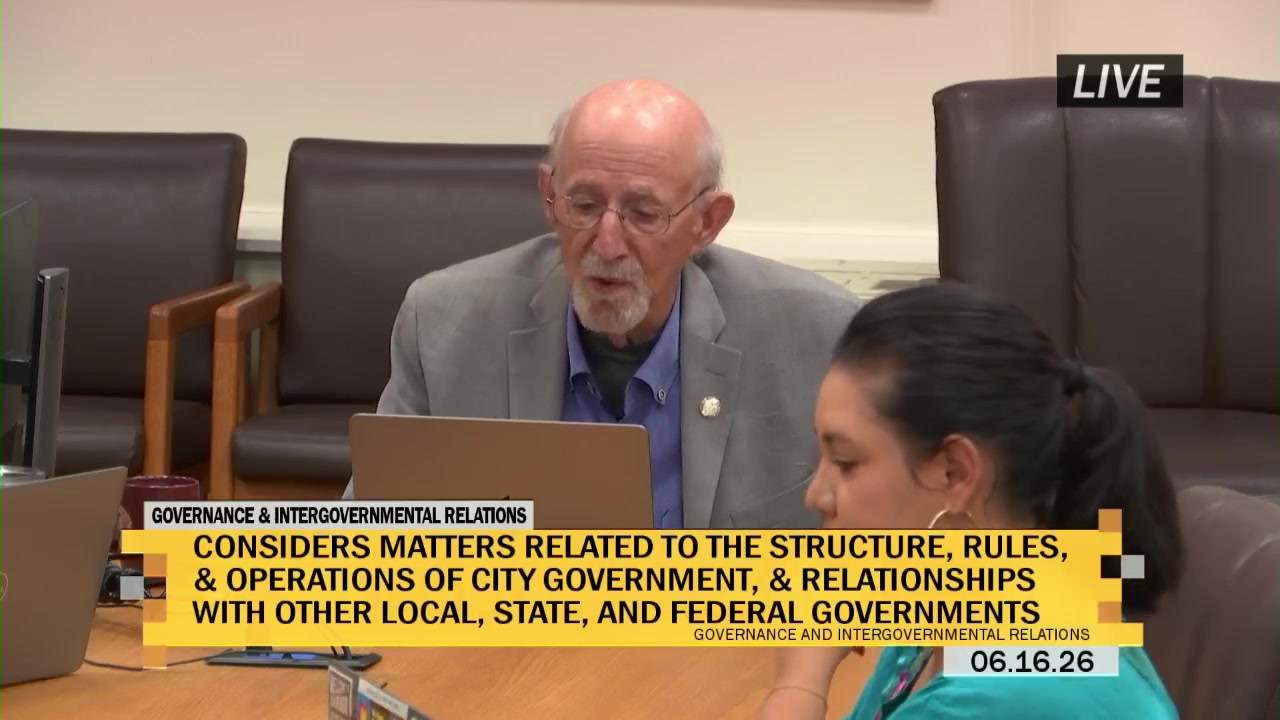
Denver City Council’s Governance and Intergovernmental Relations Committee postponed two linked budget-process measures on June 16, leaving the current budget calendar in place for now while the meeting record details what the proposals would change.
Committee minutes show the committee postponed Council Bills 26-0864 and 26-0867 together on a 4-0 vote, with three members absent. The meeting video shows Councilmember Amanda Sawyer moved to delay both items to June 30 because only four voting members were present.
One measure, Bill 26-0864, would refer a Denver Charter change to voters at the Nov. 3, 2026, election. During the June 16 discussion, staff told the committee the proposal would move the mayor’s base-budget deadline from July 1 to the first Friday in September, shift delivery of the mayor’s proposed budget from Sept. 15 to the second Friday in October, and move the council budget hearing to the last Monday in October.
The companion measure, Bill 26-0867, would amend city code to create procedures for the mayor and council to address budget changes and require community engagement in a proposed two-year budget framework. In the June 16 meeting, staff said that engagement could include surveys, community meetings, hearings or other methods, with the results folded into budget planning.
Staff and council members said the current calendar no longer fits a more complex city budget because council still receives the proposed budget Sept. 15 and has only a few days to review hundreds of pages before hearings begin. In the same discussion, presenters said council had only four days last year to analyze roughly 800 pages before the hearing process started, leaving little time for amendments or public input. They also said the current schedule strains finance staff because the work overlaps with holiday periods.
Staff said the second policy change would formalize when budget drift must return for public discussion. In the June 16 presentation, staff described a proposal that would trigger a council conversation if the budget is off by 2% and require a reappropriation discussion if the gap reaches 5%.
Staff also said the proposal would not eliminate Denver’s reserve requirements. In the June 16 presentation, they described the city’s current backstop as a mix of charter-required contingency, table reserves and unassigned fund balance.
Committee discussion also tied the code change to a two-year budget concept, but staff said Denver still would have to adopt a budget every year because of the Colorado Constitution. Under the framework described in the meeting, the first year would be the official budget and the second year would remain a draft forecast that still would have to be updated and approved annually.
For this year’s budget cycle, the postponement means the current charter calendar remains in place unless the committee, full council and then voters later approve a change. The June 16 record does not show that the later deadlines, two-year planning framework or new shortfall-response rules have taken effect for the 2026 budget process.
The June 16 materials provide a fuller account than the minutes alone. The minutes document the postponement vote, while the agenda and discussion add the proposed election timing, the later budget deadlines, the 2% and 5% response thresholds, and the public-engagement framework.
What remains unresolved from the current record is whether the measures advanced after June 16 or whether either proposal changed before another committee vote.