
Littleton adopts stricter debt targets as it weighs capital borrowing
The policy lowers the city’s governmental debt-service target to 10% of revenues and raises enterprise-fund coverage to 1.2 while officials consider future certificates of participation for capital projects.
Published at
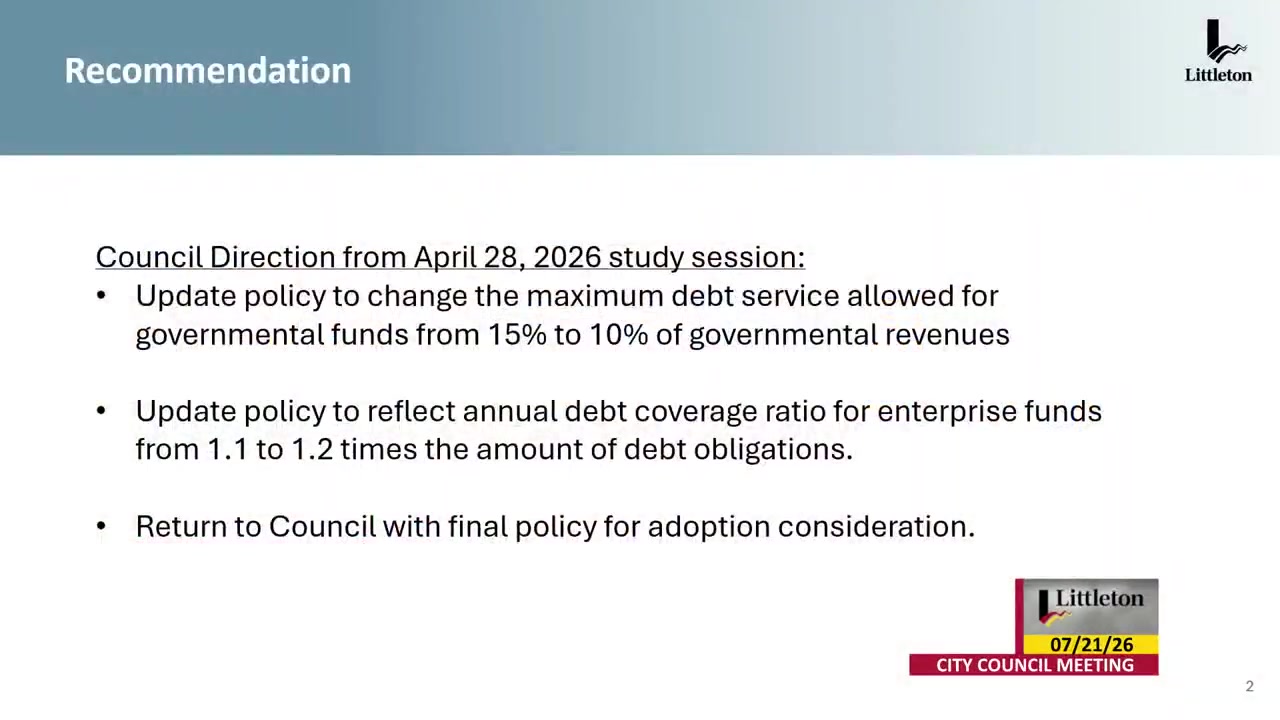
Littleton City Council unanimously adopted a debt-management policy Tuesday that lowers the city’s target for annual governmental debt service from 15% to 10% of revenues and raises the enterprise-fund debt-service coverage target from 1.0 to 1.2.
The policy does not authorize a new borrowing package. It sets guidelines for future financing as the city considers major capital projects. Finance Director Lori Mata said the changes followed an April study session and a discussion of the city’s capital needs. She cited roughly 8% annual construction inflation as a reason borrowing could allow projects to proceed sooner rather than waiting for costs to rise, she told the council.
Under the policy, Littleton will favor pay-as-you-go financing, operating funds or impact fees when feasible. It bars long-term debt for current operations and smaller projects that can be funded with current resources. The Finance Department must maintain an annual debt profile, analyze debt during the budget process and with each new issuance, identify the status of proposed financing under Colorado’s TABOR rules, and seek credit ratings when economically feasible, the city’s debt-policy packet says.
Mata said Littleton has received $32.8 million from certificates of participation previously approved for issuance and reported an S&P AA-plus rating. The packet says the 2026 certificates are tied to Downtown Main Street projects and describes proposed 2027 certificates for other council-directed projects that are not feasible to fund on a pay-as-you-go basis because of their scale and timing. Certificates of participation are lease-purchase obligations subject to annual council appropriations.
Mata also said the city had verbal approval to move ahead with certificates for a service center and possibly the Town Hall Art Center. She gave no amount or issuance date, so those plans are not final borrowing commitments. Other projects are expected to return to the council through master plans under development. The lower governmental target and higher enterprise-fund coverage requirement could force future projects to be delayed, phased or funded with cash or grants, but the record does not identify a project affected by either target.