
Denver airport sets July 26 record high at 103F as Colorado heat advisories continue
Denver International Airport reached 103F Sunday, breaking the July 26 record, while heat advisories cover eastern and northeastern Colorado.
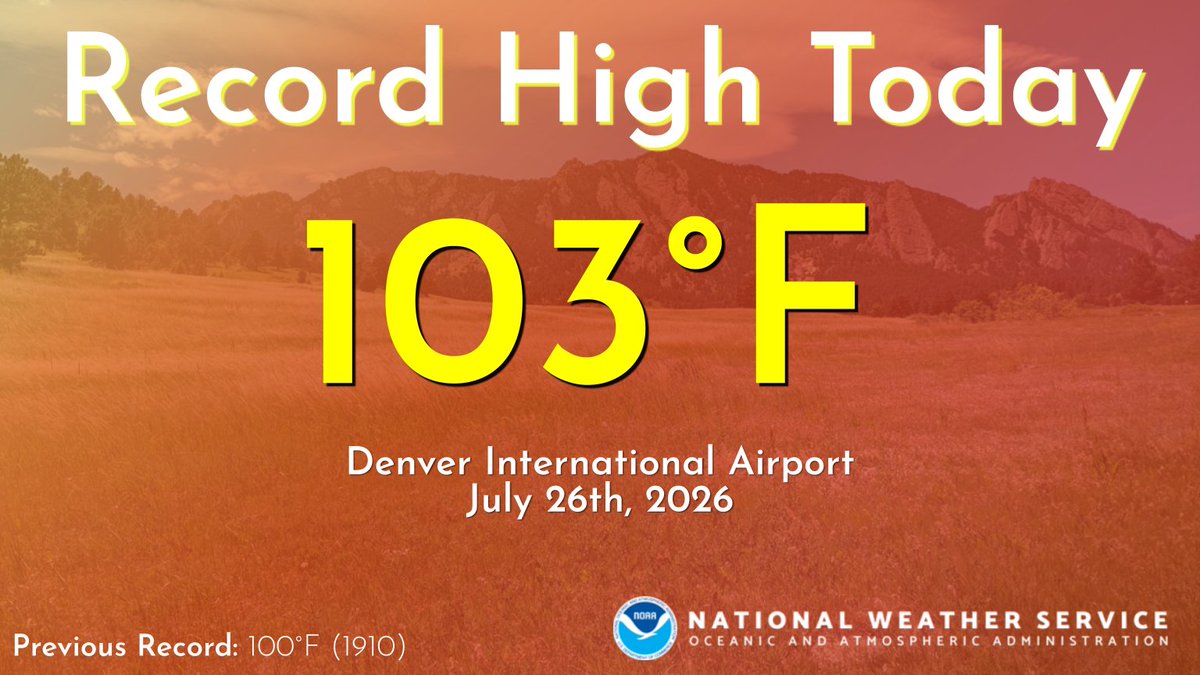
Denver International Airport reached 103 degrees Fahrenheit on Sunday, July 26, breaking the daily record of 100F set in 1910, according to National Weather Service Denver/Boulder climate records. An NWS Boulder post said similar Front Range records were expected to be confirmed, but no additional records were confirmed in the sources reviewed for this update.
A National Weather Service Heat Advisory was set to remain in effect for Cheyenne, Kit Carson and Yuma counties until 9 p.m. MDT Sunday, with heat-index values up to 105 expected, the NWS Goodland advisory says. A broader advisory for the northeastern Colorado plains is scheduled to continue through 9 p.m. MDT Monday and calls for temperatures from 100 to 105 degrees. Advisory timing and conditions can change.
Stay safe in the heat
The Colorado state government portal directs residents to call 211 Health for assistance and referrals. People seeking a cooling center should call 211 or check with their county or city before traveling; no single statewide, live cooling-center list was identified in this reporting.
Ready.gov heat guidance recommends drinking fluids, seeking air conditioning or shade, wearing loose, light-colored clothing and avoiding strenuous outdoor activity during the hottest part of the day. Check on older adults, children, neighbors and others who may have difficulty responding to heat.
Heavy sweating, weakness, dizziness and muscle cramps can signal heat exhaustion. Confusion, unconsciousness or very high body temperature can indicate heat stroke. CDC guidance says to call 911, move the person to a cool area and use cold, wet cloths or ice packs while waiting for help if heat stroke is suspected. Never leave a child or pet in a parked vehicle, even briefly.