
Englewood council to weigh more analysis of proposed South Platte Renew authority
Monday’s study session will examine a governance model that could change control, financing and liability for the wastewater utility, while leaving customer impacts unresolved.
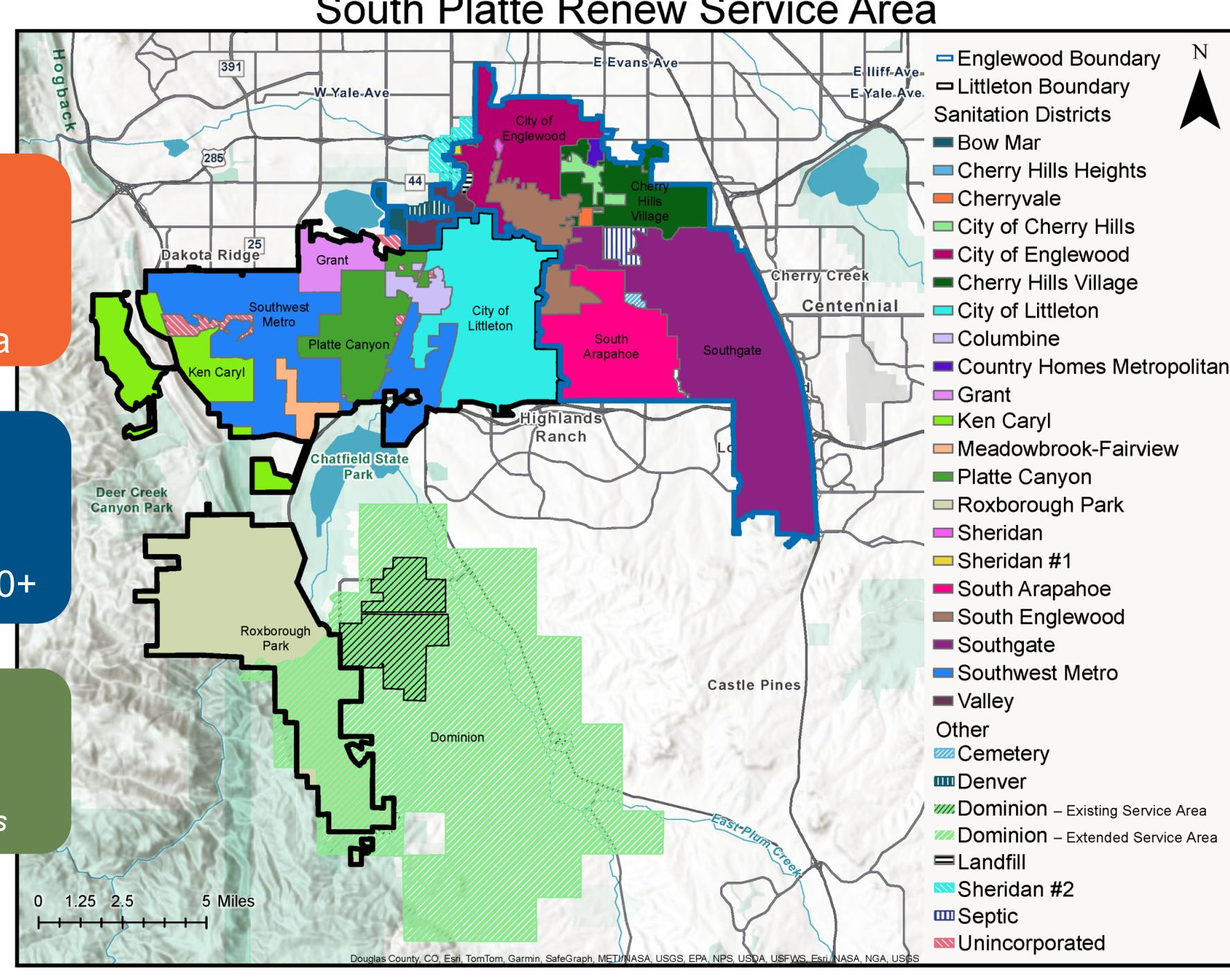
Englewood City Council is scheduled Monday to discuss whether to pursue more analysis of a proposed independent authority for South Platte Renew, the wastewater utility jointly owned by Englewood and Littleton. The utility serves more than 300,000 customers, including 19 connector sanitation districts.
The proposal has not been approved. The Aug. 10 study-session packet asks the council to review the governance analysis and provide input on next steps during a meeting scheduled for 7 to 8 p.m. No final vote or authorization to form an authority is listed.
What would change
South Platte Renew is governed through joint-use agreements adopted by Englewood and Littleton in 1973 and 1982. The cities own the facility equally, set sewer rates and fees, and oversee agreements and billing for the connector districts. Englewood also provides basic administrative services.
Under the model presented by engineering firm Hazen and CEGR Law, the cities would create a separate public corporation. The authority would take on South Platte Renew’s assets and manage its finances, operations and capital program. Englewood and Littleton would retain oversight through appointed board members.
The presentation envisions equal city representation and a tie-breaking vote but does not specify the number of board seats, appointment terms or the tie-breaking process. The cities’ collection systems, connector contracts and customer billing would remain with Englewood and Littleton, while South Platte Renew would issue wholesale bills to the cities.
The proposed authority would retain South Platte Renew’s 88 existing employees and could add staff as needed, shifting more administration away from Englewood. The model could give the utility more administrative independence, but would also reduce the councils’ direct control over its operations.
Rates, borrowing and liability
The analysis identifies potentially more predictable costs and rates, centralized administration, debt and rate smoothing, utility-specific financing and possibly improved interest rates among the model’s potential benefits. It also references possible rate savings of 0.5%.
Those are projections, not a proposed rate schedule or a guarantee of savings. The packet does not quantify customer bill impacts, administrative savings or total borrowing-cost reductions. It identifies unresolved questions involving debt capacity, credit ratings, future debt issuance and an existing federal WIFIA loan held by Englewood.
The presentation says an authority could provide better value and more predictable costs for customers in the 113-square-mile service area. It does not establish that rates would fall or billing practices would change. More than 220,000 customers are served through connector districts, compared with more than 35,000 Englewood customers and more than 45,000 Littleton customers.
CEGR Law’s analysis says operational liability would transfer to the authority while the cities’ legacy liability would diminish over time. Some legacy liability would remain, but the materials do not quantify it or explain how each existing obligation would be allocated.
Connector-district questions
The working assumption is that existing connector agreements would remain in place, but the packet identifies those agreements, customer billing and interceptor arrangements as issues requiring further consideration. It does not specify whether connector districts would receive board seats, consent rights, revised contract terms or different rates.
What happens next
The packet says both councils directed South Platte Renew to continue its governance analysis after presentations in 2022. The utility’s Supervisory Committee later directed staff to bring the authority analysis to both councils in August 2026.
At Monday’s study session, staff is seeking Englewood council input on whether additional analysis or other next steps are needed. The city’s upcoming-agenda record does not identify a final approval vote or a date for a later decision. No retrospective record is available showing what either council ultimately directed.
A formal authority would require additional decisions by Englewood and Littleton, along with answers about governance, debt, liability, rates and the role of connector districts.