
Westminster commission recommends lower threshold for affordable-housing density bonus
The Planning Commission voted 5-1 to lower the qualifying threshold from 50% to 15% while retaining a potential 30% density bonus. City Council has not scheduled a hearing or vote.
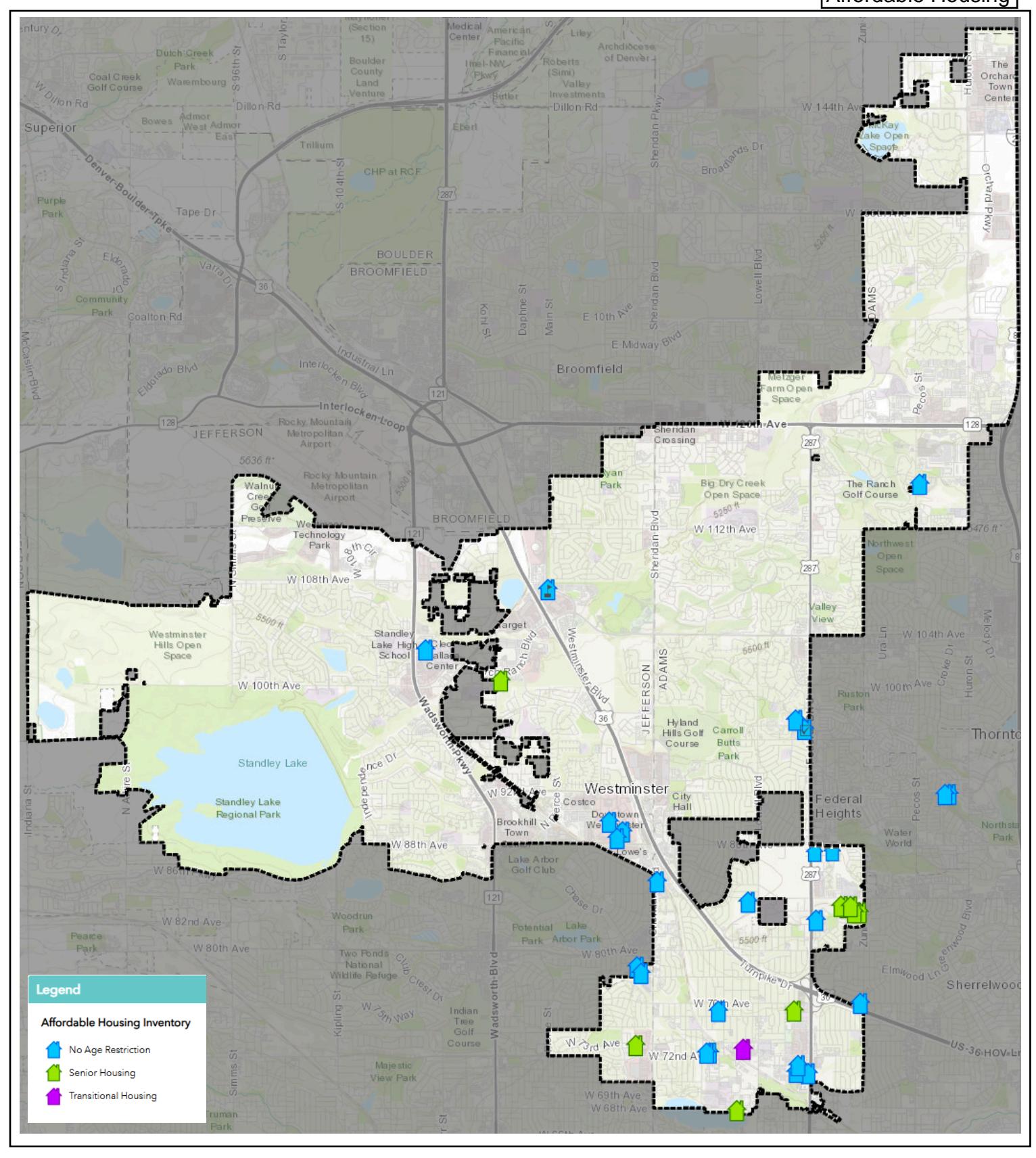
Westminster’s Planning Commission voted 5-1 Tuesday to recommend allowing qualifying affordable-housing developments up to 30% more density than the 2040 Comprehensive Plan permits, while lowering the share of income-restricted units required to qualify from 50% to 15%.
The recommendation still requires City Council approval. As of Aug. 12, city records showed no scheduled Council hearing, agenda item or adoption date for the amendments. The city calendar lists a regular Council meeting Aug. 24, but does not identify these amendments for consideration.
The Planning Commission meeting record shows commissioners debating whether the original 50% threshold could discourage unsubsidized private developers from using the bonus. Commissioner Pegg, who moved for the 15% threshold, said the change could help maximize the number of affordable units produced by allowing mixed-income projects to participate. Other commissioners argued that units created through the bonus should be affordable.
The motion changed the qualifying definition from developments in which “at least 50% of the units are restricted” to developments in which at least 15% are restricted. The record does not show the commission adding a requirement that all units created by the bonus be income-restricted. The lower threshold could allow more mixed-income projects to qualify, but could also result in fewer affordable units per qualifying project. The record contains no estimate of how many additional affordable units either threshold would produce.
The potential bonus remains 30%. Staff’s example uses a five-acre site where the plan allows 18 dwelling units per acre: The standard calculation would allow 90 units, while a 30% bonus could allow 117. The example is not tied to a pending project.
The proposal would exclude the Downtown Westminster and Westminster Station Specific Plan areas, where density allocations were based on assumptions about ultimate utility capacity, the commission’s Aug. 11 packet says. A new attached, detached single-family or multifamily development could qualify if at least 15% of its units serve households earning no more than 80% of regional median income, as defined by the U.S. Department of Housing and Urban Development. The proposed glossary distinguishes an 80% income limit for rental properties from a 120% limit for owner-occupied properties and references affordability programs recognized by HUD, the Colorado Housing and Finance Authority, the Colorado Department of Local Affairs and applicable law.
Staff told commissioners that about 2.3% of Westminster’s land — roughly 500 acres — is vacant and available for new housing. Staff characterized the expected water-supply impact of qualifying projects as minimal, based on the anticipated pace of development. Future applications would still undergo site-specific water, wastewater and infrastructure reviews.
The bonus is intended for future income-restricted developments. The packet identifies two affordable-housing projects approved in the past five years outside the excluded areas — Maiker at the Uplands, with 70 units, and Overlook at the Uplands, with 247 — but does not identify a project that would use the proposed bonus. Staff lists no city expenditure or funding source for the amendment.
The proposal is separate from, but related to, Westminster’s broader rewrite of its Unified Development Code, which covers zoning, subdivision rules, parking, signs, rentals, historic preservation, telecommunications, oil and gas and floodplain regulations. The June 23 Planning Commission addendum describes a public-review draft that also includes provisions for adaptive reuse, infill, redevelopment and office and industrial development, along with other housing changes such as more housing types, accessory dwelling units and an affordable-housing density bonus.
Staff said the rewrite would replace eight separate development-rule documents with one code. The draft generally would reduce minimum parking requirements by about 40% to 50%, with further reductions possible through parking studies, shared-parking credits and transit-proximity adjustments, according to workshop materials.
The city calendar lists the June 23 item as a workshop, not a hearing or vote. Staff said it was reviewing more than 1,400 public and internal comments and expected to prepare a revised draft later in 2026, likely in the fourth quarter, before sending it to City Council. The record does not establish a hearing or adoption schedule for the broader rewrite.
The Aug. 24 calendar listing identifies a regular Council meeting but does not list the affordable-housing amendments. No later Council agenda, ordinance, minutes or public notice establishing a consideration or adoption date was available as of Aug. 12.