
Arapahoe commissioners to consider workforce plan serving two counties
Commissioners are scheduled to consider an update to the Arapahoe/Douglas Works! plan before it is submitted to state workforce officials; county staff warn that inaction could affect services and funding.
Arapahoe County commissioners are scheduled to consider authorizing an updated workforce plan for Arapahoe and Douglas counties on Sept. 22, before the plan is submitted to state workforce officials. County staff say authorization is required for the submission.
The Board of County Commissioners will discuss the plan at 1:30 p.m. during a study session. The county staff report recommends authorizing the board chair to execute the update, which covers program years 2024 through 2027 and includes a required mid-cycle narrative update for 2026–27.
The study-session agenda schedules the discussion but does not include a vote or final authorization. The staff report says the plan must be approved before it can be submitted to the Colorado Department of Labor and Employment and the Colorado Workforce Development Council.
The plan sets the framework for workforce services in both counties, including federal Workforce Innovation and Opportunity Act programs for adults, dislocated workers and young people; Wagner-Peyser employment services; Colorado Works and Employment First/Supplemental Nutrition Assistance Program services; and other grants and initiatives. Arapahoe County serves as the grant recipient and fiscal agent for workforce-development funds in the local area.
County staff warn that failing to authorize the update could put Arapahoe/Douglas Works! out of compliance with state and federal requirements, threaten continued service delivery and lead to the loss of state or federal funds. The report does not identify a specific grant or amount tied to that potential loss.
The 2024–27 local plan describes a “no-wrong-door” system connecting residents with career services, education, credential training, work-based learning, supportive services and business assistance through government and community partners.
The plan identifies housing costs, child care and transportation as barriers to employment. It says 51,647 households in the two-county region pay at least 35% of their gross income in rent and estimates that 863 people will experience homelessness in 2026. Proposed responses include referrals to rental assistance, housing and human-services partners, virtual services, mobile-friendly forms, satellite locations and transportation assistance.
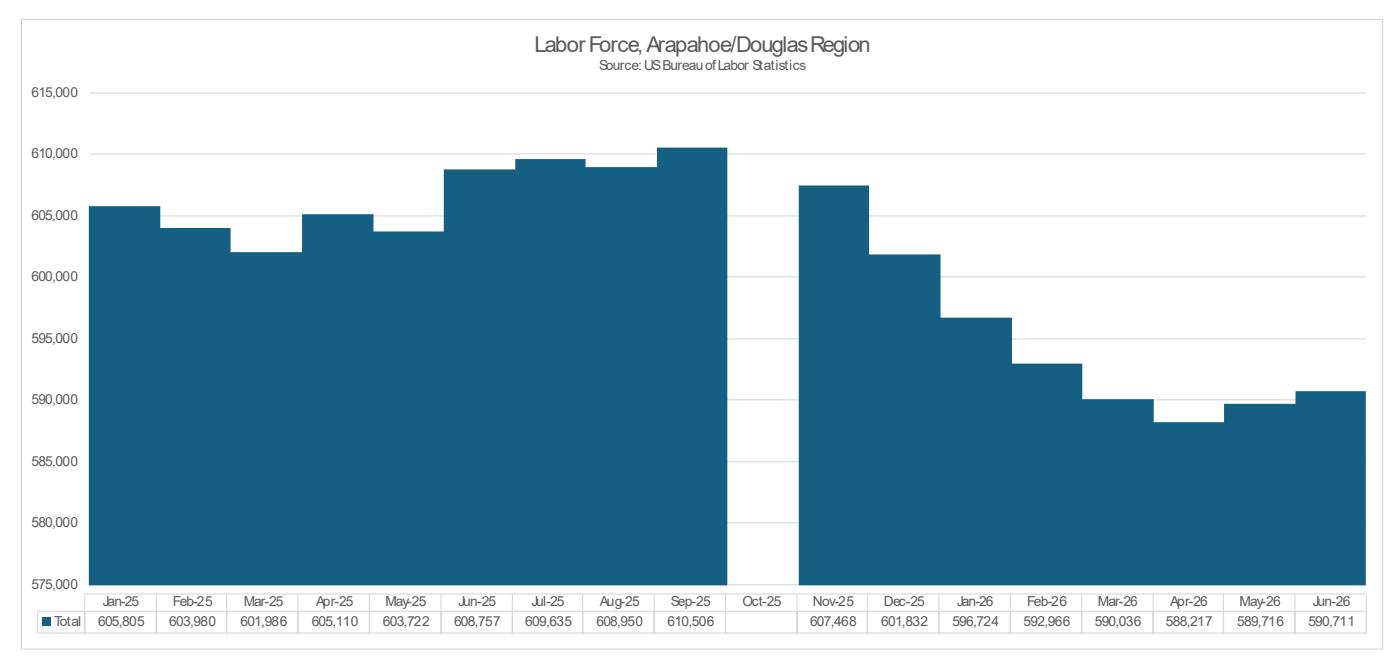
The plan also estimates that infant care could cost more than half of median earnings in several lower-wage occupations. It calls for expanded co-enrollment, short-term credentials, career pathways, apprenticeships, bilingual services and other work-based learning. The plan says the region’s labor force declined by 15,094 people, or 2.5%, between January 2025 and June 2026, attributing the change to factors including lower participation, migration patterns and an aging population.