
Arapahoe County proposes development fee for $68 million I-70 interchange
The county projects $45.5 million in fee revenue for the Airpark Road project; the plan also identifies a $22.5 million funding gap and anticipated metro-district borrowing.
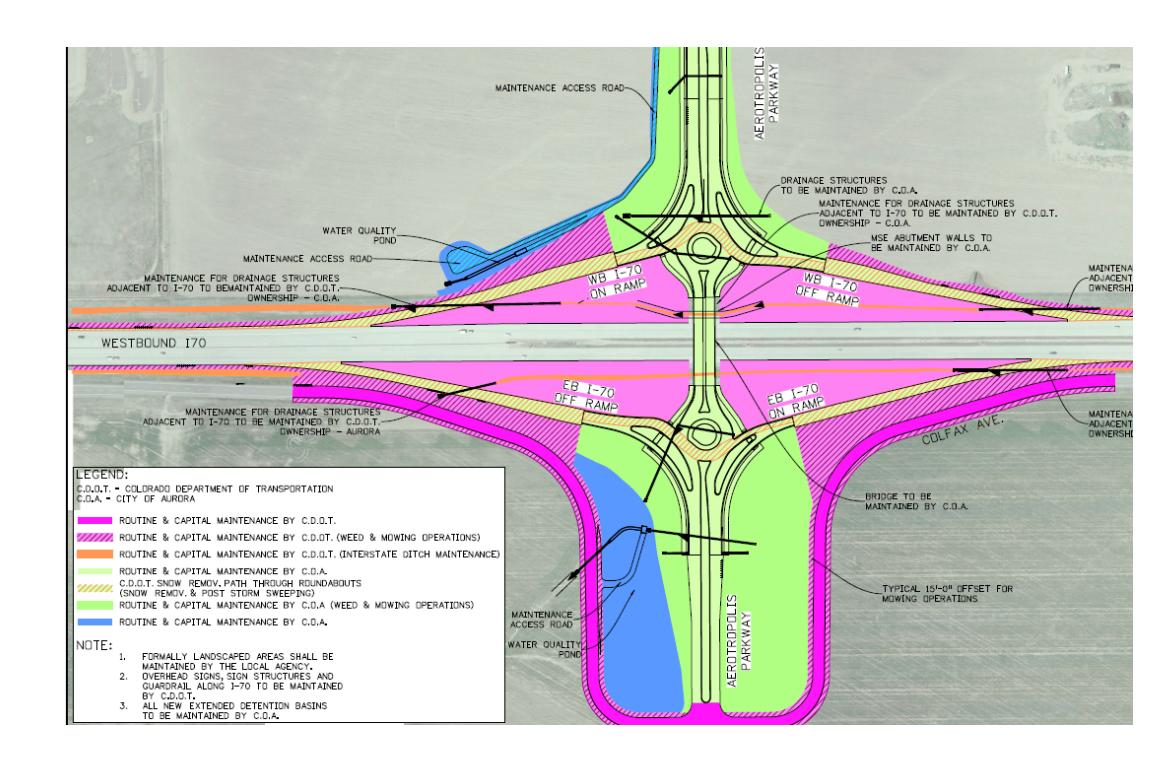
Arapahoe County staff have outlined a financing plan for a new I-70/Airpark Road interchange that would use a development fee and anticipated contributions tied to growth in Aurora. The county estimates the project will cost $68 million, including financing. The fee and funding agreements have not been approved; the plan is among materials prepared for a Sept. 29 Board of County Commissioners study session.
The estimate includes $40 million for construction and $28 million in financing costs. The county projects $45.5 million in impact-fee revenue—about $34 million from Sky Ranch development and $11.5 million from Eastgate—leaving a projected $22.5 million gap. The county presentation says the gap would be covered by $5 million from existing development and a $17.5 million pro-rata share associated with Aurora development. Those amounts are projections, not final payment commitments.
The presentation also lists $22.5 million in Regional Improvement Mills currently being assessed by the Sky Ranch Metro District. The county expects the Sky Ranch and Eastgate metro districts to issue bonds backed by impact-fee and mill revenue, with each district responsible for its own debt. The county’s Board summary describes other, narrower Sky Ranch commitments: about $500,000 for prior studies, about $500,000 for improvements to the existing interchange, and funding for design. A separate agreement makes the Sky Ranch developer responsible for $923,765 in costs for the Colorado Department of Transportation’s approval process under Section 1601.
The proposed fee would apply to qualifying new residential and non-residential development in a roughly six-square-mile area of eastern, unincorporated Arapahoe County. Under the draft resolution, development requiring a county building permit would pay before the permit is issued. Residential fees would be charged per dwelling; non-residential fees would depend on land use and gross floor area. For example, the draft lists a single-family home fee of $7,854 in the higher-fee tier and $826 in the lower-fee tier. A convenience store with gas would pay $83,180 or $8,752 per 1,000 square feet, depending on the tier. The resolution says the fee is intended to cover a proportionate share of capital improvements needed because of growth, not existing deficiencies unrelated to new development.
The resolution is still a draft, with its adoption date and vote fields blank. Staff materials propose a public meeting to consider the fee in November. Staff also sought support for an agreement to distribute impact-fee revenue to the metro districts; that agreement would follow fee adoption. The is unsigned and does not establish final payment shares.