
Roxborough Village district seeks authority for wildfire, waste services
The proposal would let the 945-acre district offer limited wildfire mitigation, arrange waste collection and perform restricted covenant enforcement, without changing West Metro Fire’s emergency role or the district’s levy cap.
Published at
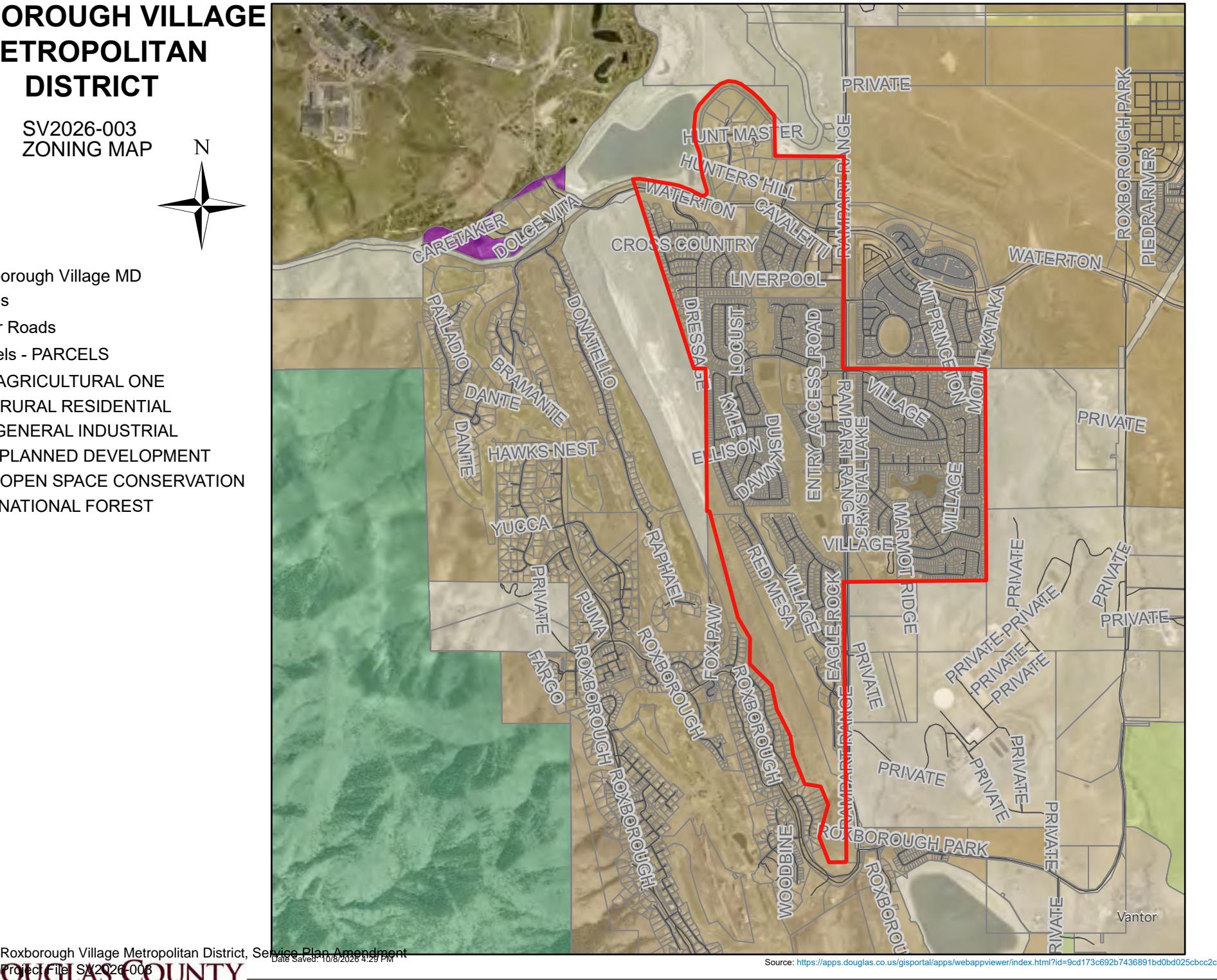
Roxborough Village Metropolitan District is seeking Douglas County approval to add limited wildfire mitigation, solid-waste services and restricted covenant enforcement to its authority. The district board approved the draft for submission in August. The district covers about 945 acres, with 2,381 residential lots and 14 commercial lots, the proposed amendment and county staff report say.
The Planning Commission has scheduled a public hearing for Nov. 2 at 6 p.m. The commission agenda lists the hearing. The commission may recommend approval, but the Board of County Commissioners must approve the amendment for it to take effect; county materials list a board hearing for Dec. 15.
The proposed fire work is limited to voluntary programs to remove and chip slash and replace soffit vents. Other mitigation would require written coordination with or consent from West Metro Fire Protection District. The district could not require vegetation removal on private property under this authority or use eminent domain for fire protection. West Metro would retain its comprehensive fire, ambulance and other emergency-service role, and its board consented to the district’s limited mitigation role.
The amendment would also allow the district to arrange solid-waste collection and transportation, including contracted residential service, and establish noncommercial composting facilities open to district residents and the general public. It would authorize the district to charge fees and require residents to use the collection service or pay user charges.
Covenant enforcement and design review would be limited by state law and available only where a master association or similar organization does not already provide those services and statutory conditions are met.
The plan identifies property-tax levies as a primary source of general district revenue and allows service fees and charges. Approval would not itself create debt or increase the district’s operations-and-maintenance levy cap, which would remain 12.087 mills. The proposal does not specify waste-service rates, a start date or a dedicated budget for the service.