
Denver Water’s 2026 water-sales shortfall narrows to $11.2 million
The September forecast trims the projected sales gap from August, with total revenue above budget and total uses of funds below it. The report also attributes a hiring freeze, canceled internships and selected spending reductions to drought measures.
Published at
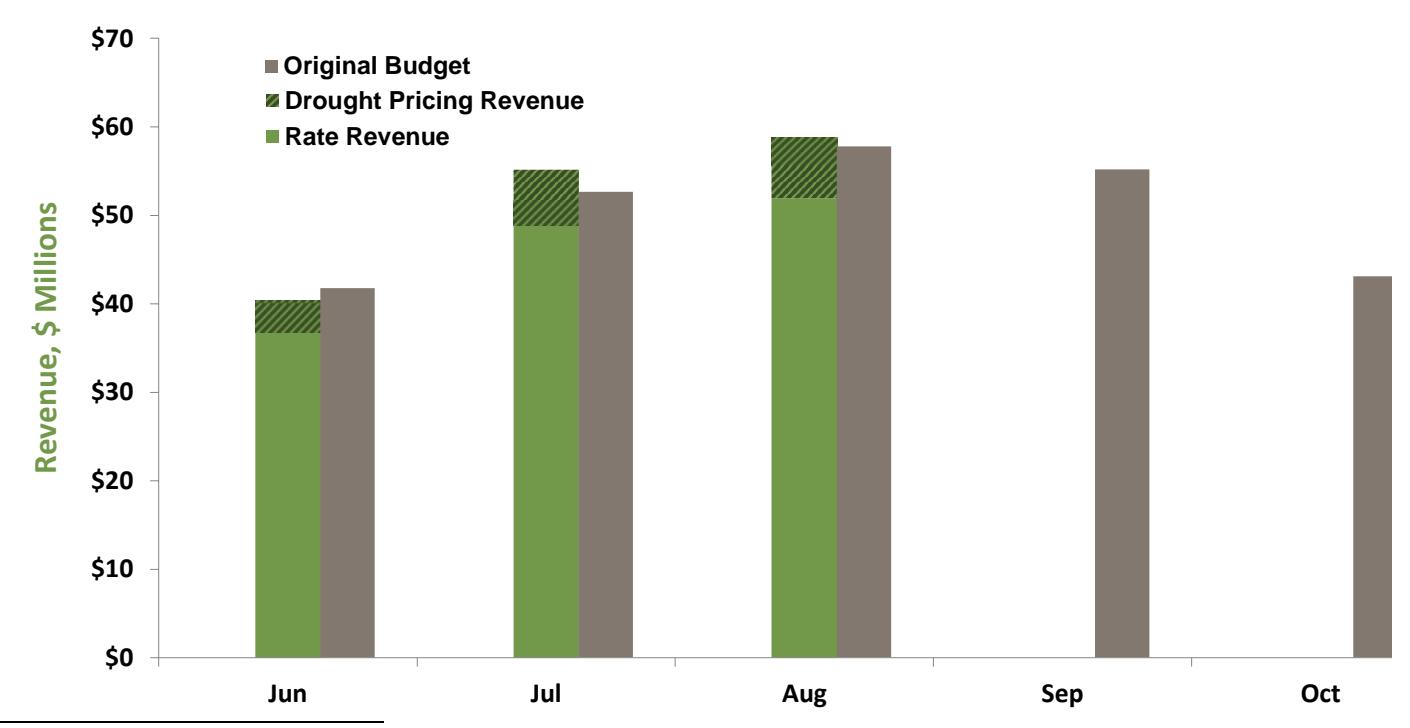
Denver Water forecasts 2026 water-sales revenue of $398.455 million, $11.175 million below budget, while total revenue is projected at $495.332 million, $6.845 million above budget. The September financial report in the Board of Water Commissioners’ agenda packet also forecasts total uses of funds at $792.719 million, $41.005 million below budget. These are forecasts, not final results.
The projected water-sales shortfall is $3.515 million narrower than in August. The August financial report projected total revenue of $490.528 million and uses of funds of $848.408 million, or $14.685 million above budget. It attributed the revenue outlook in part to interest income, the timing of a legal settlement and system development charges. The August report also showed year-to-date billed consumption of 44.2 billion gallons, compared with 45.5 billion budgeted, and cautioned that billing cycles may not align with calendar months.
The September report incorporates anticipated drought-related revenue impacts into its water-sales forecast but does not quantify their share of the shortfall. Despite lower projected water-sales revenue, total revenue is forecast above budget. Capital spending is projected at $16.664 million above budget, while operating costs are forecast $8.393 million below budget.
The report links workforce measures to drought reductions. A hiring freeze contributes to a forecast vacancy rate of 6.4%, including limited-term employee wages, compared with the budgeted 5.5%. Seasonal labor is forecast $462,000 below budget, and the report says the 2026 internship program was canceled as a drought reduction.
The report also lists professional services $811,000 below budget, purchased services $1.099 million below, construction and field services $1.666 million below, and facility services $1.055 million below, with comments describing changes across divisions as drought reductions. It says the applied-labor forecast was reduced by removing labor for deferred projects.