
Castle Rock projects $148.9 million gap between revenue and spending
The townwide year-end shortfall is $69.8 million smaller than in its amended 2026 budget, largely because capital spending is forecast below budget; development-fee revenue is also projected to lag.
Published at
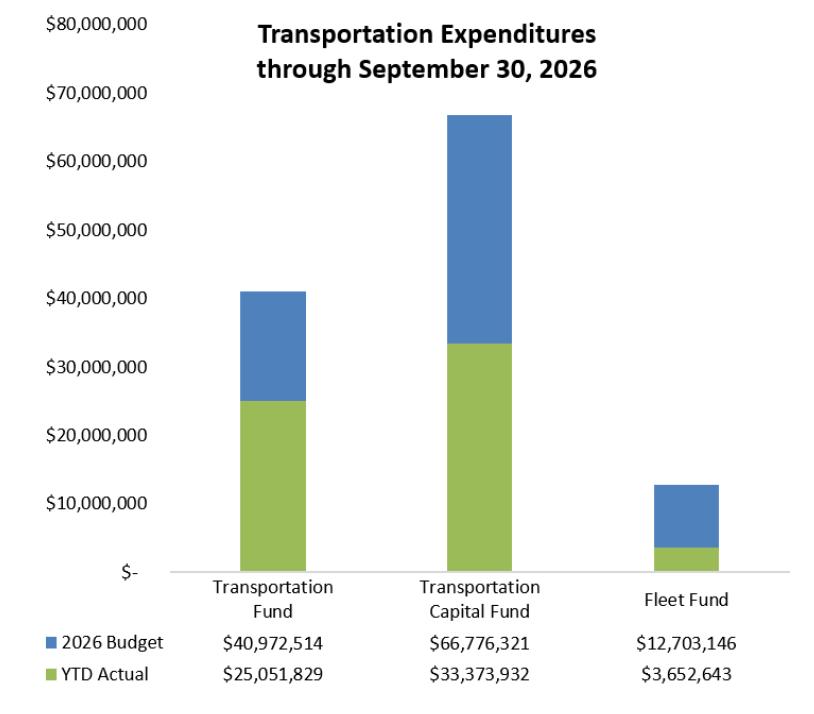
Castle Rock projects $148.9 million more in expenditures than revenue by year-end, a townwide gap $69.8 million smaller than in its amended 2026 budget. The forecast includes capital and other fund activity, not just the General Fund’s operating results.
The town forecasts $413.9 million in revenue, $7.5 million above budget, and $562.8 million in expenditures, $62.3 million below budget. Capital spending accounts for $52.1 million of the spending variance: the third-quarter financial review estimates $291.1 million in capital expenditures, compared with an amended budget of $343.3 million. The review cites project schedules and timing for several spending variances.
Through Sept. 30, revenue was $10.3 million below the adjusted year-to-date budget, while expenditures were $115.3 million below it. Town staff attributed the revenue lag mainly to slower-than-expected growth and the timing of revenue recognition for large projects, including the Crystal Valley Interchange. For the full year, the town forecasts revenue above budget, in part because of higher town-tax and investment-earnings estimates, more than offsetting shortfalls in some development fees, staff said in the third-quarter report.
The town projects $6 million in impact-fee revenue, $4.3 million below budget, and $16 million in system-development-fee revenue, $8.6 million below budget. Staff linked the gaps to fewer-than-anticipated licenses and permits. Through September, the town had issued 121 single-family permits, no multifamily permits and 13 commercial project permits. The 2026 revenue assumptions included 300 single-family permits and 110 multifamily units. The commercial assumption was 180,000 square feet of projects, so it is not directly comparable to the number of commercial permits issued. Building use tax was above its year-to-date budget because residential and commercial permit valuations were higher than anticipated, the report said.
The review forecasts $231.2 million in ending funds, with $44.3 million remaining after its listed reserves and designations. The town calls the latter figure “net funds available”; it is not the full ending balance and does not mean all town funds are unrestricted.