
Arapahoe County proposes lower groundwater allowances for future development
County modeling found physically producible groundwater averages about 60% of the amount allowed under state allocation rules. The proposed factors remain unadopted.
Published at
Arapahoe County staff are proposing aquifer-specific factors that could reduce how much future development is supported by Denver Basin groundwater. County modeling found that physically producible water in the study area averaged about 60% of the amount allowed under the state’s allocation formula.
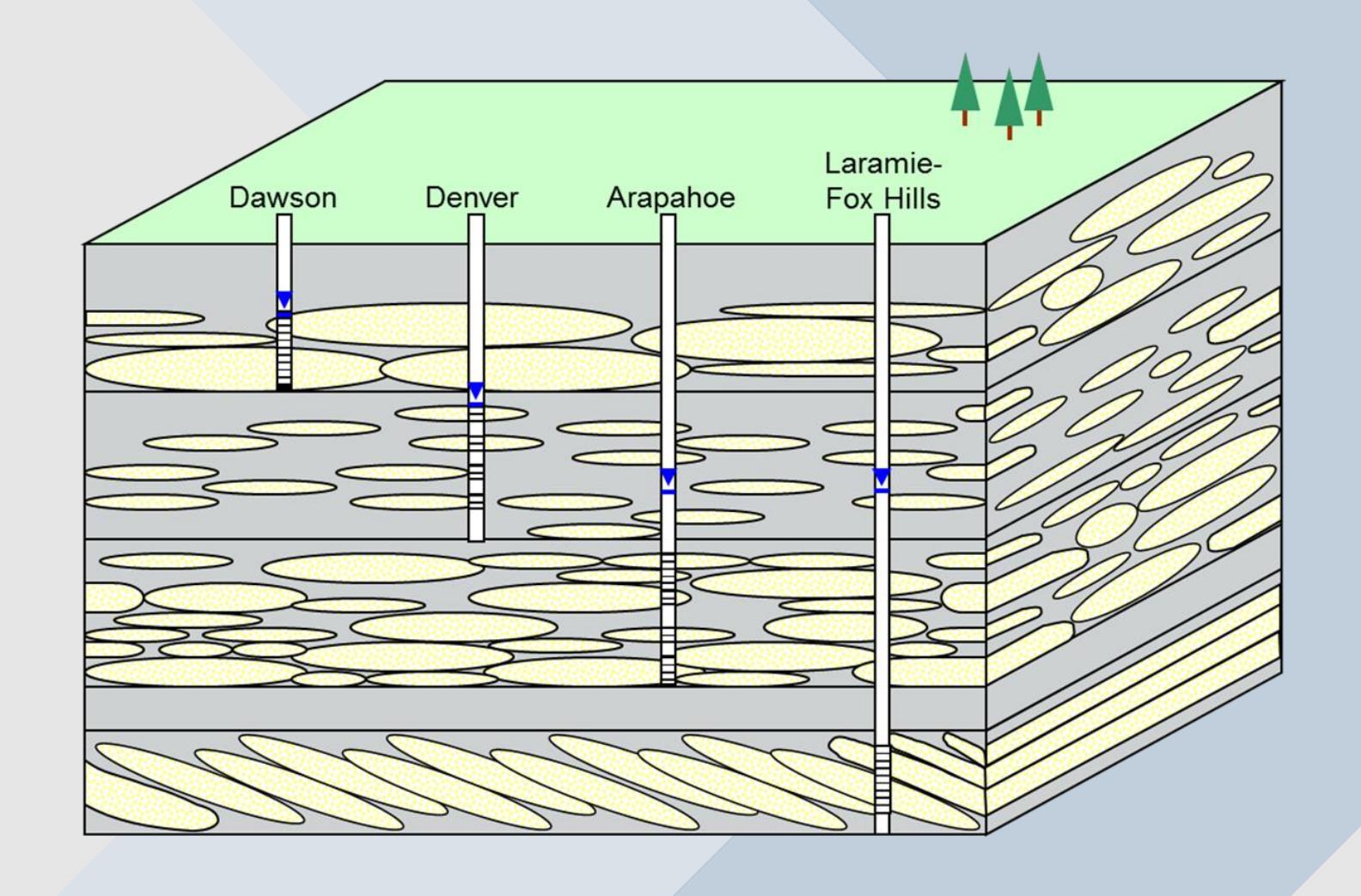
The 2024 county water-supply study compares modeled water that can be produced using current well-construction methods with state legal allocation calculations. It puts modeled availability at 60% of the state-rule amount for the Denver aquifer, 42% for the Upper Arapahoe, 27% for the Lower Arapahoe and 71% for the Laramie-Fox Hills. The study says its modeling accounts for regional drawdown and well-to-well interference that the legal formula does not fully reflect.
The draft Water Supply Element would apply those percentages as factors during development review. Staff says the approach is intended to better reflect what the aquifers can sustainably produce. A county presentation illustrated the potential effect with a hypothetical allocation that would support 100 homes under the state calculation and about 59 using a weighted-average factor; it was not an assessment of a specific project, the presentation shows.
The Planning Commission unanimously recommended adding the Water Supply Element to the county’s 2018 Comprehensive Plan and forwarding the revised plan to the Board of County Commissioners for approval on Oct. 20, after an informational study session on Sept. 21, the commission’s minutes record. County staff recommends approval, and the Board has scheduled a public hearing for Nov. 24, the staff report says. State law sets Dec. 31, 2026, as the deadline for including a water-supply element in the comprehensive plan. If approved, the element would guide future water-supply review, but the proposed factors would need to be incorporated into development regulations before becoming enforceable standards.
In referral comments, Arapahoe County Public Health said the draft’s discussion of fire flow did not convey its concern about boil-water notifications after pressure losses during wildfires. The department said the ability to pump or store enough water to reduce system-wide pressure-loss risk is important, and that high-water-use industries such as data centers did not appear to be addressed, its comments say.
The Inverness Metropolitan Improvement District and Inverness Water and Sanitation District objected to language suggesting Inverness faces a projected water-supply deficiency. They asked the county to revise or remove those references, saying their supply plan can meet projected demand under the assumptions they described. The county’s hearing report says the concerns came after the referral deadline and staff proposed meeting with the districts.