
Broomfield weighs $14 million to $48 million options for Great Western Reservoir
City staff are comparing selective repair, full dam replacement and decommissioning as state regulators could restrict storage within three to five years; lower reuse demand has improved the reservoir’s near-term outlook, but no option has been selected.
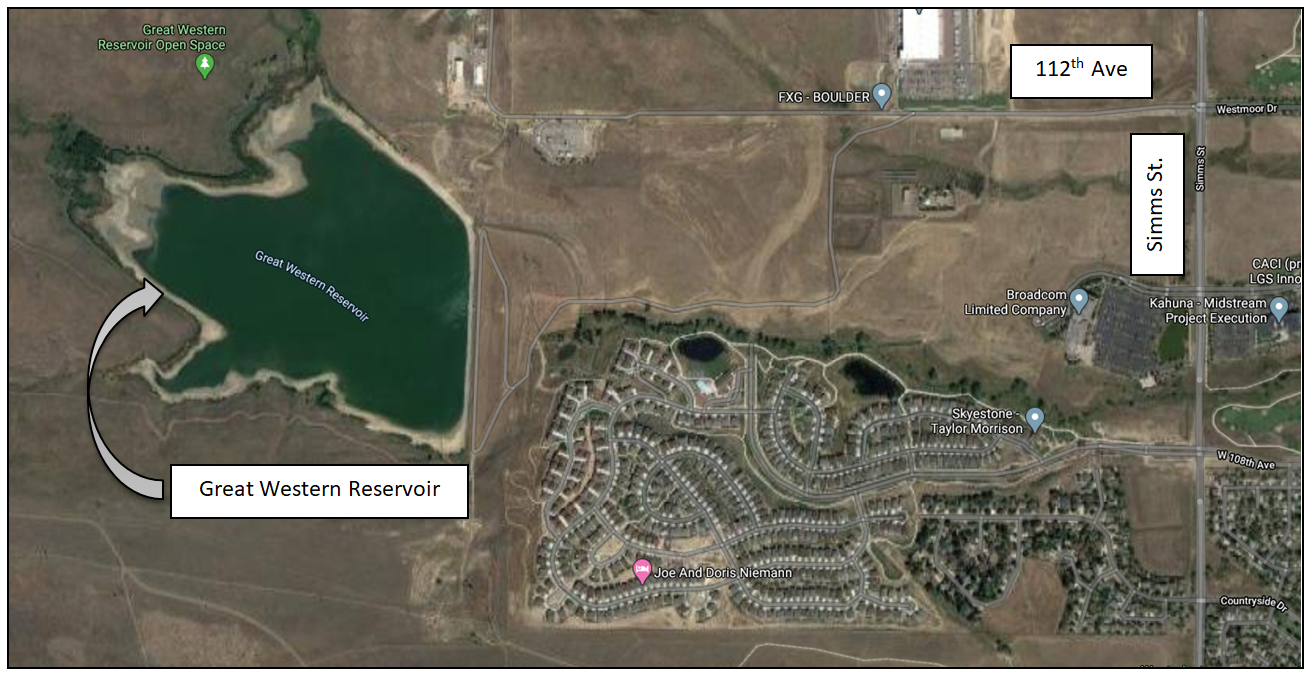
Broomfield is evaluating three options costing $14 million to $48 million to address failing drainage and outlet systems at Great Western Reservoir. State regulators could restrict storage there within three to five years, city staff say in the July 21 study-session packet. That could put at risk a reclaimed-water source that supplies nearly 20% of citywide demand.
Broomfield’s potable and reuse systems remain at drought-watch status, according to Water Utilities Deputy Director Mark Laurie’s update at the Aug. 25 City Council meeting. Potable use was near the city’s five-year average, while reuse demand had fallen about 10% after staff requested a voluntary 20% reduction from reuse and raw-water customers. The council meeting video shows staff recommending continued drought-watch status rather than a new formal drought-stage action by the council.
Laurie said staff had been taking less water from the reservoir and pumping more treated reuse water directly from the wastewater facility. That helped stabilize reservoir storage and reduced staff’s concerns about sustainability for the rest of the irrigation season. Staff plan to continue monitoring Northern Water’s November and April quota decisions, winter snowpack and Denver Water’s spring review of its 20% curtailment. A new drought-stage recommendation, if needed, would likely come in late April or early May.
The options are a roughly $35.9 million selective repair, a $48 million dam replacement or decommissioning for an estimated $14 million. The decommissioning estimate excludes the water supplies and infrastructure needed to replace the reservoir’s capacity. Staff had not identified a preferred option or sought council funding as of July 16.
Staff planned to finish modeling and present a recommendation at a fall 2026 study session. If the council later gives direction, the city plans to begin formal design and include the selected alternative in its proposed 2028 Capital Improvement Program. That is a planning target, not an adopted appropriation or construction schedule.
Great Western storage supplies more than half of Broomfield’s irrigation deliveries in most years, staff said. The reuse system delivered about 2,015 acre-feet — roughly 657 million gallons — in 2025, including water for hundreds of acres of city parks and other areas. Without the storage, staff said, the system could not meet peak summer irrigation demand.
Selective repair would permanently seal the existing outlet pipe, build new outlet works outside the dam embankment and partially excavate the dam to replace its toe-drain system. Full replacement would rebuild the dam and its drainage and outlet systems and take the reservoir offline for about two years.