
Broomfield Housing Alliance says 500 affordable homes advanced since 2022
The alliance says roughly 550 more homes remain in its pipeline as it seeks stable revenue for housing preservation, emergency shelter and other programs.
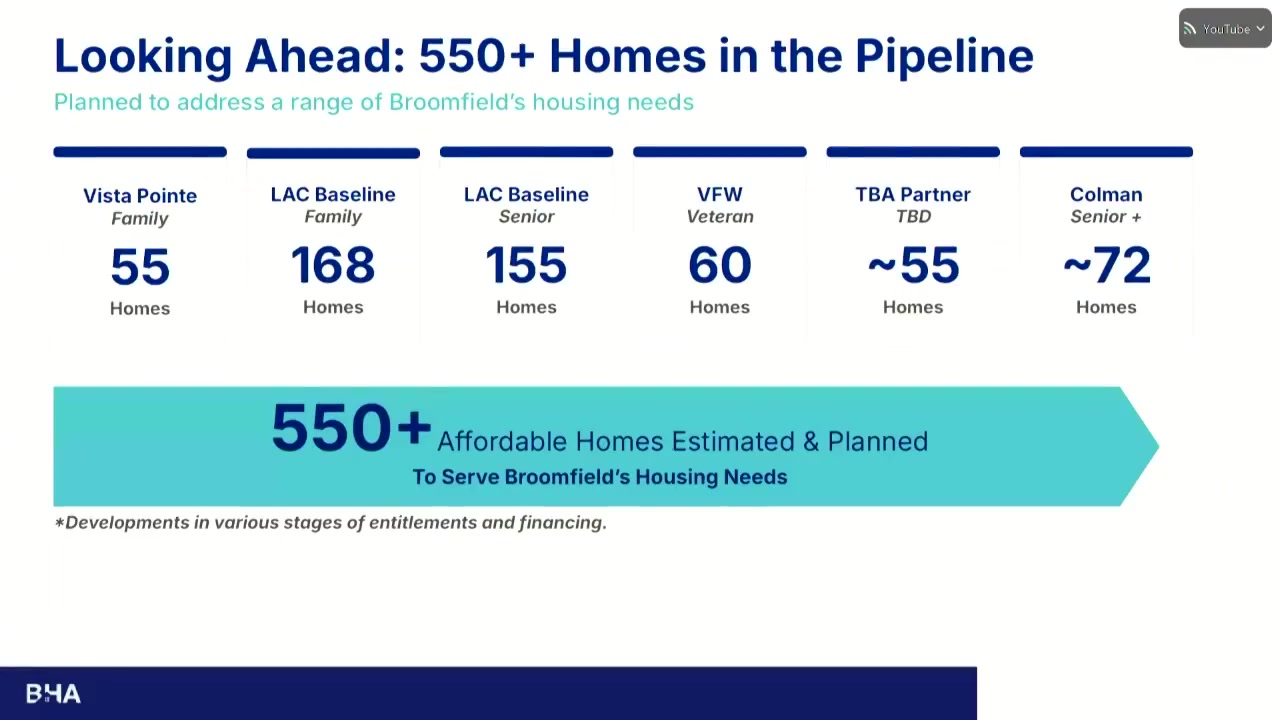
The Broomfield Housing Alliance told the City Council on Sept. 8 that more than 500 affordable homes have advanced since 2022, while roughly 550 more remain in its pipeline with financing pending.
Kristen Heiser, the alliance’s executive director, said the homes advanced include 40 neuroinclusive homes at The Grove, which recently opened, and 152 units under construction at Harvest Hill. At The Grove, 13 residents have moved in, eight more have been approved to move in and five applications are in process, she said.
Heiser said the pipeline homes are in varying stages of planning, entitlements, financing and partnership development. She also reported about $3.95 million in local investment since 2022 and more than $28.4 million in additional housing resources leveraged by that investment — more than $7 for every local dollar.
The alliance is seeking about $3.5 million in stable annual revenue, which Heiser said could support its severe-weather hotel-voucher program, create a self-sustaining investment fund, help secure state and federal awards, and support preservation acquisitions. The alliance examined five multifamily properties over the past two years for possible acquisition and long-term affordability but lacked the cash to act, she said.
Preserving affordable housing requires more than buying a property, Heiser said. Buildings also need capital and aesthetic improvements, along with ongoing operating support because rents and operating budgets at affordable properties are limited.
The alliance administers 50 housing vouchers. Heiser said new federal and state vouchers were unavailable. Its severe-weather program, operated with Almost Home, provides hotel vouchers to eligible registered people on very cold days.
The presentation provided context for Broomfield’s proposed lodging-tax measure. An Aug. 11 City Council packet proposed raising the lodging tax on stays of fewer than 30 days from 1.6% to 6%. The measure could generate an estimated $2.4 million annually for housing programs if voters approve it, including preservation, attainable and workforce housing, and long-term housing stability.
The Sept. 8 presentation was informational; it did not approve new annual revenue or preservation funding. The alliance did not provide a project-by-project breakdown of financing for the pipeline homes.