
Broomfield staff project housing fund could be depleted by end of 2027
More developers are building affordable units on-site instead of paying cash-in-lieu fees, prompting staff to delay a policy review and propose interim funding steps.
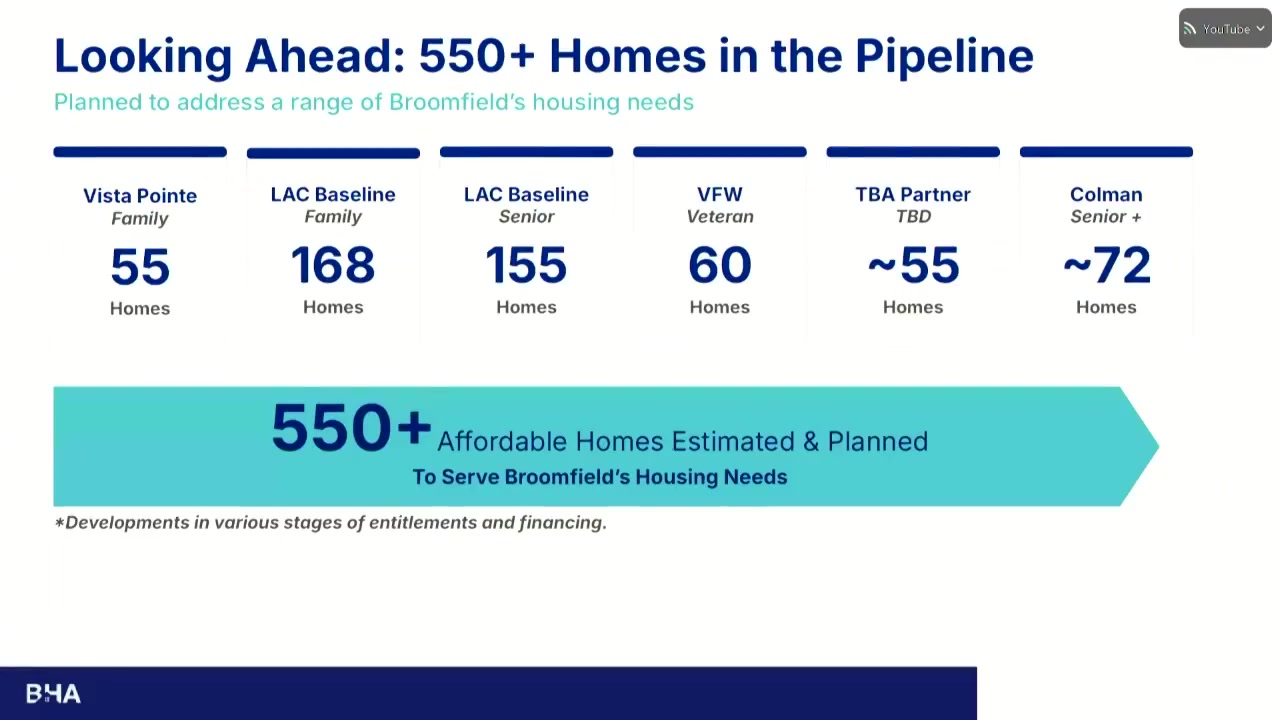
Broomfield staff project the city’s Housing Development Fund could face significant depletion by the end of 2027 as more developers build affordable units on-site instead of paying cash-in-lieu fees. The projection was included in the Sept. 15 housing assessment and Inclusionary Housing Ordinance staff materials.
The fund is financed primarily by cash-in-lieu payments required under Broomfield’s inclusionary-housing system. The payments are restricted to affordable-housing development, preservation and related program administration. Staff attributed the projected revenue decline to developers increasingly choosing to build affordable units on-site.
The current cash-in-lieu fees, effective January 2026, are $169,976 for each for-sale development unit and $109,407 for each rental development unit. The fees will remain in place under the existing schedule and will be adjusted annually based on the Consumer Price Index for All Urban Consumers for the Denver-Aurora-Lakewood area.
Staff recommended postponing the required fee and policy review until 2027 rather than changing the system during the Sept. 15 study session. The materials say the city plans to bring formal recommendations to the City Council in summer 2027, after completing its housing assessment and considering the outcome of a November 2026 lodging-tax ballot measure and a finalized agreement with the Broomfield Housing Alliance.
The draft 2027 budget proposes moving core housing-stability programs to the city’s General Fund, although the materials do not establish that transition or identify an amount. A proposed lodging-tax measure could provide dedicated affordable-housing funding for households earning up to 60% of the area median income if voters approve it. A proposed governmental agreement would establish how the Broomfield Housing Alliance would administer that revenue.
During the meeting, Housing Policy Manager Sharon Tessier said staff wanted to see the lodging-tax election result and determine how the Housing Alliance agreement would address households earning from 0% to 60% of the area median income before returning to the inclusionary-housing discussion. The recorded study-session discussion indicates staff expected to return after roughly four or five months to assess available funding and the roles of the Housing Division and the alliance.
The draft 2026 Housing Needs Assessment identifies a shortage of 2,595 rental units affordable to households earning less than half of the area median income. It estimates that a household earning 100% of area median income could afford a home priced at about $310,808, compared with a typical Broomfield home value of $645,985. Six percent of homes listed or sold fell within the price range identified for most potential first-time buyers.