
Denver proposal would restrict algorithmic rent-setting and tie compliance to rental licenses
The plan would bar landlords from using pricing tools to set rents and allow complaints and penalties; a committee briefing is scheduled for Oct. 26.
Published at
Denver City Councilmembers Shontel Lewis and Paul Kashmann are proposing to bar landlords from using algorithmic tools—or data from those tools—to set rents, vacancy levels or other rental information. The proposal would also prohibit providers from selling or supplying the tools or data to residential rental-property owners and operators, according to the proposal presentation.
The proposal has not been formally introduced as legislation. The Budget and Policy Committee agenda schedules a briefing for Oct. 26 at 1:30 p.m.; it does not list a vote, the agenda shows.
Under the proposed rules, landlords registering through Denver’s Rental Registry would have to attest to compliance as a condition of licensure. Tenants and tenant unions could complain to the Department of Licensing and Consumer Protection, which could investigate, subpoena documents and impose licensing penalties of up to $5,000 per violation. Occupants could also seek damages, an injunction and civil penalties of up to $5,000 per violation. The proposal would let occupants who prevail recover reasonable attorney’s fees and costs.
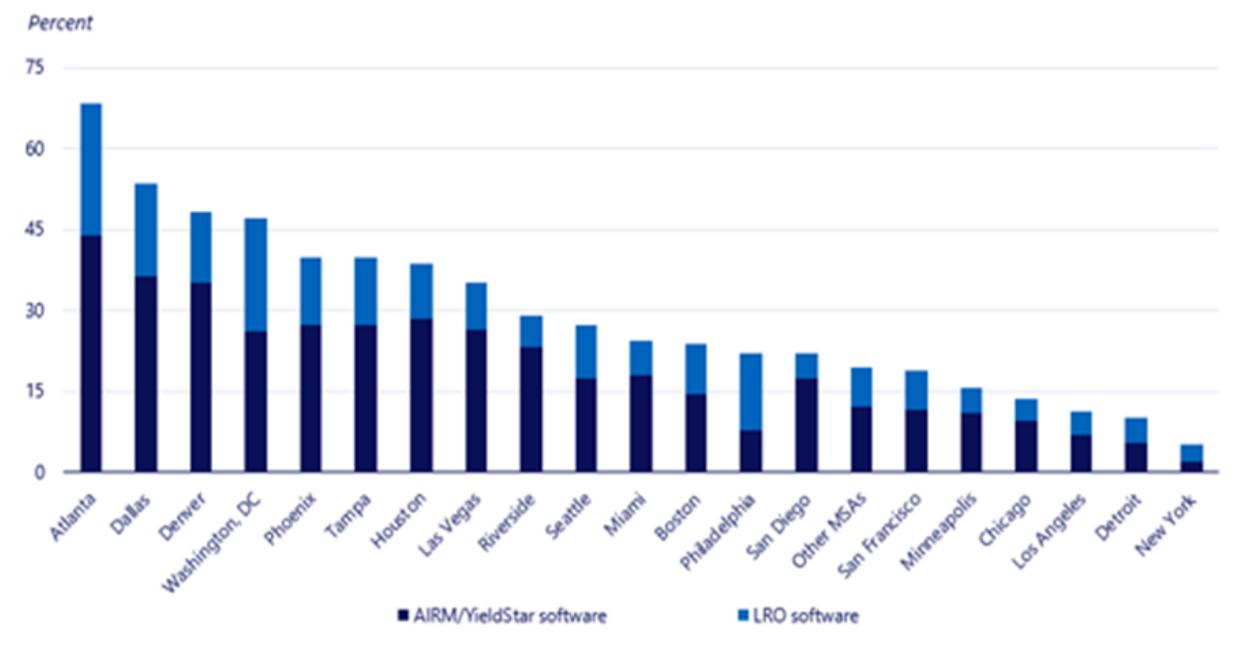
The presentation cites Denver’s 2023 ranking as third among U.S. markets for the share of multifamily units using RealPage software, and second for the estimated monthly cost associated with price-coordinated units: $136. The Denver Post reported those figures.
The $136 figure is a model, not a measured average increase on renters’ bills. The White House Council of Economic Advisers estimated it by comparing modeled prices when landlords using the same software coordinate pricing with prices under independent decision-making. Its technical appendix describes the metro-level inputs and assumptions and cautions that the estimates are approximate, not specific to individual units.
The Denver Post’s 2024 report also quoted differing views on the software. Zach Neumann, co-CEO of housing nonprofit the Community Economic Defense Project, supported action, while Colorado Apartment Association vice president Drew Hamrick said the software can help landlords manage vacancies and lower prices and disputed that rental price-fixing occurs.