
Draft Tri-Cities homelessness plan proposes $705,000 without secured replacement for federal funding
The regional framework assigns roles and estimates costs but names no replacement grant, federal program, expiration date or payment shares for Englewood, Littleton, Sheridan and Arapahoe County.
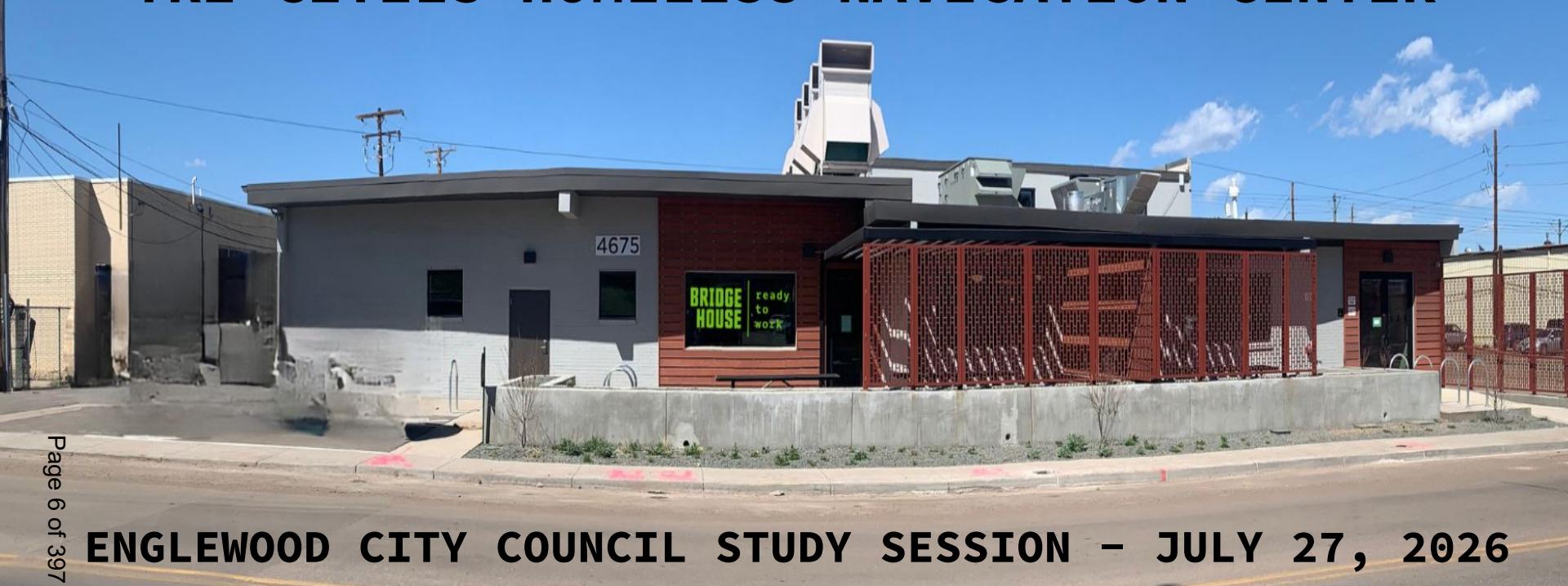
A draft Tri-Cities Homeless Action Plan proposes spending $705,000 over three years on regional homelessness services, but it does not identify a secured replacement for federal operations funding that Bridge House says is ending.
The funding question came before Englewood City Council on July 27 during an update on Bridge House’s Ready to Work program and the Tri-Cities Homeless Navigation Center. The council was asked for feedback; it did not adopt the plan or approve the estimate.
Bridge House’s presentation and the draft plan say the region should compete for private, state, federal and Continuum of Care funding. The packet identifies the expiring money only as “federal funding for operations.” It does not name the federal program, state an expiration date or show that replacement funding has been awarded.
The draft does not set shares for Englewood, Littleton, Sheridan or Arapahoe County. It estimates $150,000 for a lead service provider for single adults, $25,000 for a central navigation-center feasibility study and $50,000 for a lead provider for families, without saying whether jurisdictions, partners or future grants would cover those costs.
Under the proposed governance model, the county and the Tri-Cities Homelessness Policy Council — made up of Englewood, Sheridan and Littleton — would convene a regional leadership body. A coordinator would handle system tracking and reporting, funded by the county and cities. The plan also contemplates lead providers for single adults and families, identifying Change the Trend members and Family Tree as possible partners.
Englewood is reviewing city-owned property for a possible central navigation center. The existing center operates at the Englewood site after a Littleton-led procurement. The packet separately notes that Englewood previously authorized $350,000 in American Rescue Plan Act funds for its share of action-plan projects and contributed $78,750 to Littleton for the center; it does not say either amount is part of the proposed $705,000.
Since opening in May 2025, the Navigation Center has served 227 unique day-service clients and 492 people who stayed at least one night, Bridge House reported. Ready to Work, which opened at the same site, had served 96 participants, including 12 graduates. Five graduates had found full-time work and seven were interviewing. The 50-bed program averaged 36 residents per night in the second quarter of 2026.
The presentation lists underuse of day-resource services, transportation barriers and staffing shortages as challenges. It does not say low use will change operations or the regional plan. The draft instead calls for a future lead provider to expand assessments and entries into the OneHome system.
For now, the plan is a framework for seeking money and assigning regional roles, not a funding commitment. The federal program’s identity, the amount at risk and each jurisdiction’s payment share remain unresolved.