
Littleton council to review four Geneva Village redevelopment scenarios Aug. 11
A city packet outlines housing, commercial, civic and mixed-use approaches for the Geneva Village site, while demolition, funding and a preferred redevelopment plan remain undecided.
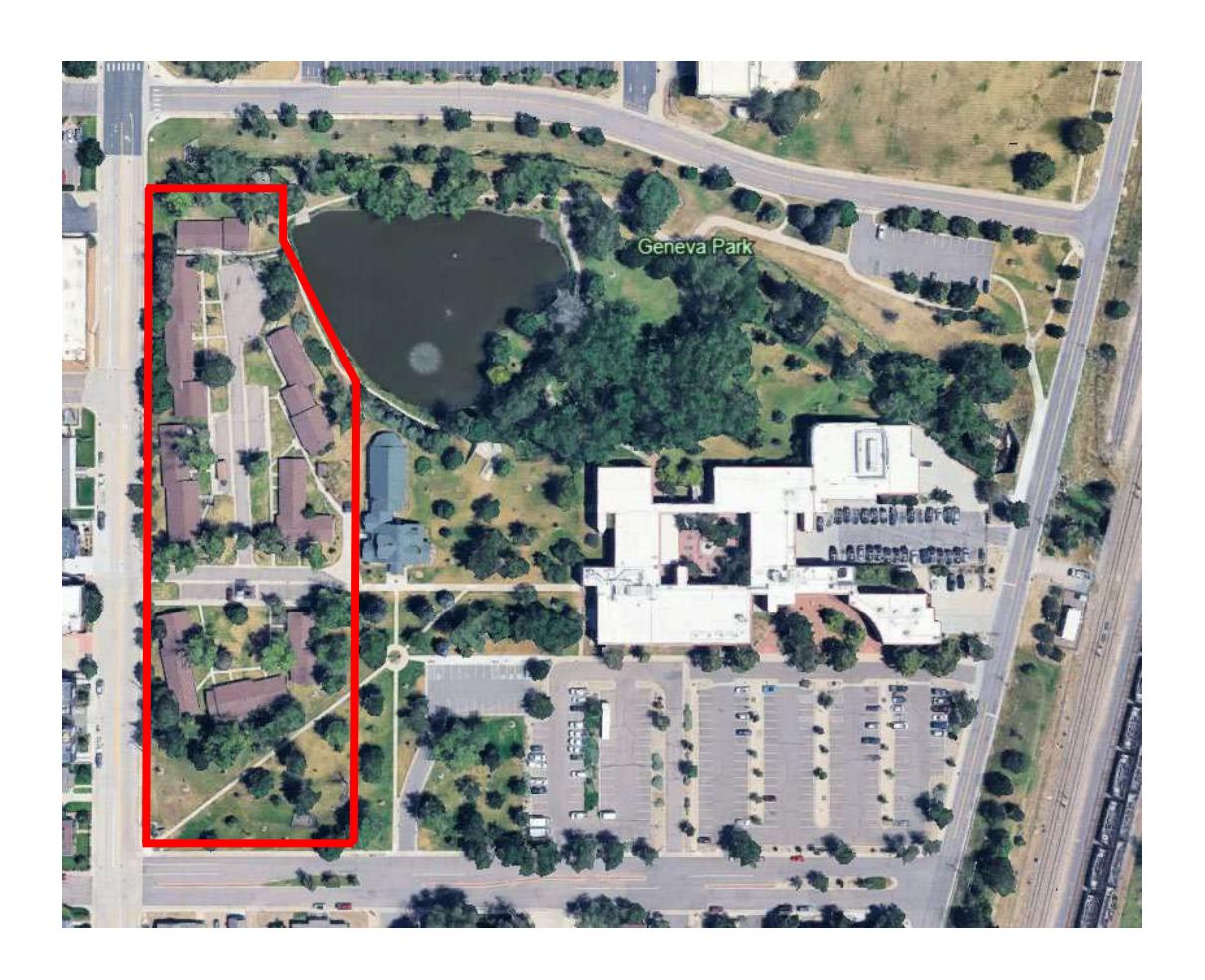
Littleton City Council is scheduled to review four redevelopment scenarios Aug. 11 for the vacant, city-owned Geneva Village complex and surrounding Northern Gateway site. Consultants estimate demolition at $300,000 to $625,000, but the city has not selected a preferred plan, demolition option or funding source, according to the council packet.
The study session is about decision frameworks, not a final redevelopment decision. The packet says the alternatives are analytical frameworks rather than recommendations, and that the city has not determined a redevelopment program, land-disposition strategy, governance model or procurement approach.
The four scenarios are:
- Maximize housing: A housing-led neighborhood with varied housing types, an affordable component, open space and community amenities.
- Balanced approach: Housing combined with neighborhood retail and office uses, with hospitality and civic space tested against market demand.
- Maximize commercial and employment: Office, retail and hospitality uses without residential development.
- Maximize civic priorities: Civic uses to be defined with the council, supported by retail and office space and centered on a public realm and community anchor. The packet does not specify a housing component.
All four scenarios assume reuse of the city-owned land, floodplain integration and preservation or adaptive reuse of the historically designated Geneva Lodge. Those are scenario assumptions, not council commitments. Floodplain restrictions, drainage issues and limited circulation are identified as site constraints. Slaughterhouse Gulch runs through the site and could connect toward the Mary Carter Greenway trail system.
A 2025 ULI Colorado Technical Assistance Panel separately recommended adaptive reuse of Geneva Lodge, improvements to Geneva Park, a mix of housing types and incomes, and integration or restoration of Slaughterhouse Gulch. Its recommendations, including possible workforce, senior or artist live/work housing and civic or cultural uses, do not establish a required unit count, affordability level or final preservation plan.
Consultants propose comparing the options by alignment with city goals, land value, potential ongoing tax revenue, economic impact, feasibility, risk and the degree of city control. Possible city roles range from selling the land to retaining ownership as a ground lessor or acting as owner or master developer through a public-private partnership. The packet also identifies development agreements, joint ventures, phased dispositions and possible tax-increment financing or other incentives, but none has been selected.