
Denver reports lower violent gun crime but more firearm homicides in 2026 goals briefing
Denver reported a 25% decline in citywide violent gun crime, but firearm homicides rose to 35 from 29 at the same point last year as council members sought more detail on crime, housing, homelessness and jobs initiatives.
Denver officials reported a 25% year-over-year decline in citywide violent gun crime while also reporting 35 firearm-homicide victims so far this year, up from 29 at the same point in 2025. The contrast emerged during the city’s Aug. 11 briefing on progress toward its 2026 goals. The Mayor-Council briefing did not provide the underlying counts, reporting cutoff or methodology for the crime comparisons.
Mayor Mike Johnston said shootings at targeted Place Network Investigation sites were down 33% and violent gun crime at those sites was down 43%. The city’s goals dashboard separately confirms a 33% year-to-date decline in shootings at current PNI sites and identifies a 20% reduction in high-risk-area shootings as the city’s goal. Those targeted-site figures are not citywide results.
Johnston characterized the firearm-homicide figures as fewer shootings that were more lethal. The 35-to-29 comparison represents an increase of about 21%, although the mayor described it as roughly 20%. The dashboard lists 20 gun-related homicides through June 30 and does not reproduce or explain the briefing’s 35-versus-29 comparison.
The briefing also reported 4,000 permitted housing units toward a 5,000-unit annual goal. The dashboard lists 4,033 units. For affordable housing, the city reported about 500 units toward a 2,500-unit goal; the dashboard lists 495 and says most targeted units are expected to come online in the second half of 2026. The briefing did not identify the units’ locations, tenure, funding sources or completion status.
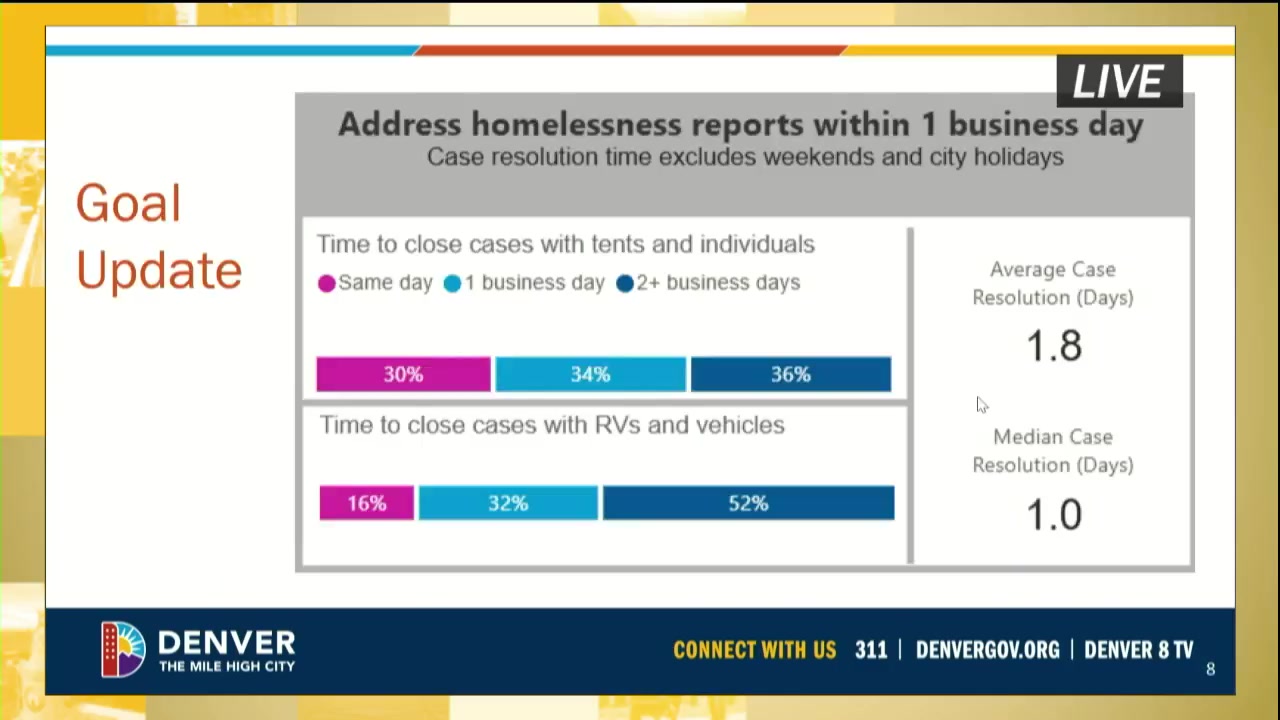
The city reported that 812 people had exited homelessness through permanent housing in 2026. The dashboard describes the figure as 812 people exiting through “permanent or stable housing” through the second quarter. Officials also reported a 1.8-day average response time to Street Engagement reports. The dashboard lists a one-day median response time, while the briefing said nearly 60% of cases were addressed within one day. The city reported a 64% decline in sheltered homelessness since 2023 but did not disclose the measure’s methodology or population.
Council members asked for more detail on the homelessness figures, including whether a case marked “closed” means someone was connected to services or simply no longer present at the reported location. They also requested recurring measurements beyond the federally required point-in-time count, data on people with long shelter stays—particularly in congregate shelters and at Crossroads—and breakdowns of family homelessness and shelter experiences, including concerns about prolonged stays at Tamarack.
Johnston also described Launch Denver, Build Denver, Open Denver and Work Denver, including a proposed $40 million fund intended to help workers move into better-paying jobs. The city did not disclose a funding source, formal appropriation, eligibility rules, implementation timeline or approval status. The official goals materials reviewed for the story do not mention the proposal.
Child-care planning remains preliminary. Officials described a citywide work group, discussions with providers and families, an online survey and listening sessions intended to shape a framework for affordable, reliable child care. The city is also developing a guidebook on opening child-care centers. The briefing did not disclose the framework’s cost, capacity target, implementation schedule or definition of “universal” child care.
Key unanswered questions include the crime data’s cutoff, underlying counts and methodology; geographic and demographic breakdowns; the requested homelessness data; and the financing and authorization of the workforce fund.