
Littleton residents rate quality of life highly, cite housing costs and traffic as concerns
Littleton’s 2026 resident survey found high satisfaction with quality of life and city services, while housing costs, traffic, street conditions, homelessness and growth ranked among residents’ leading concerns.
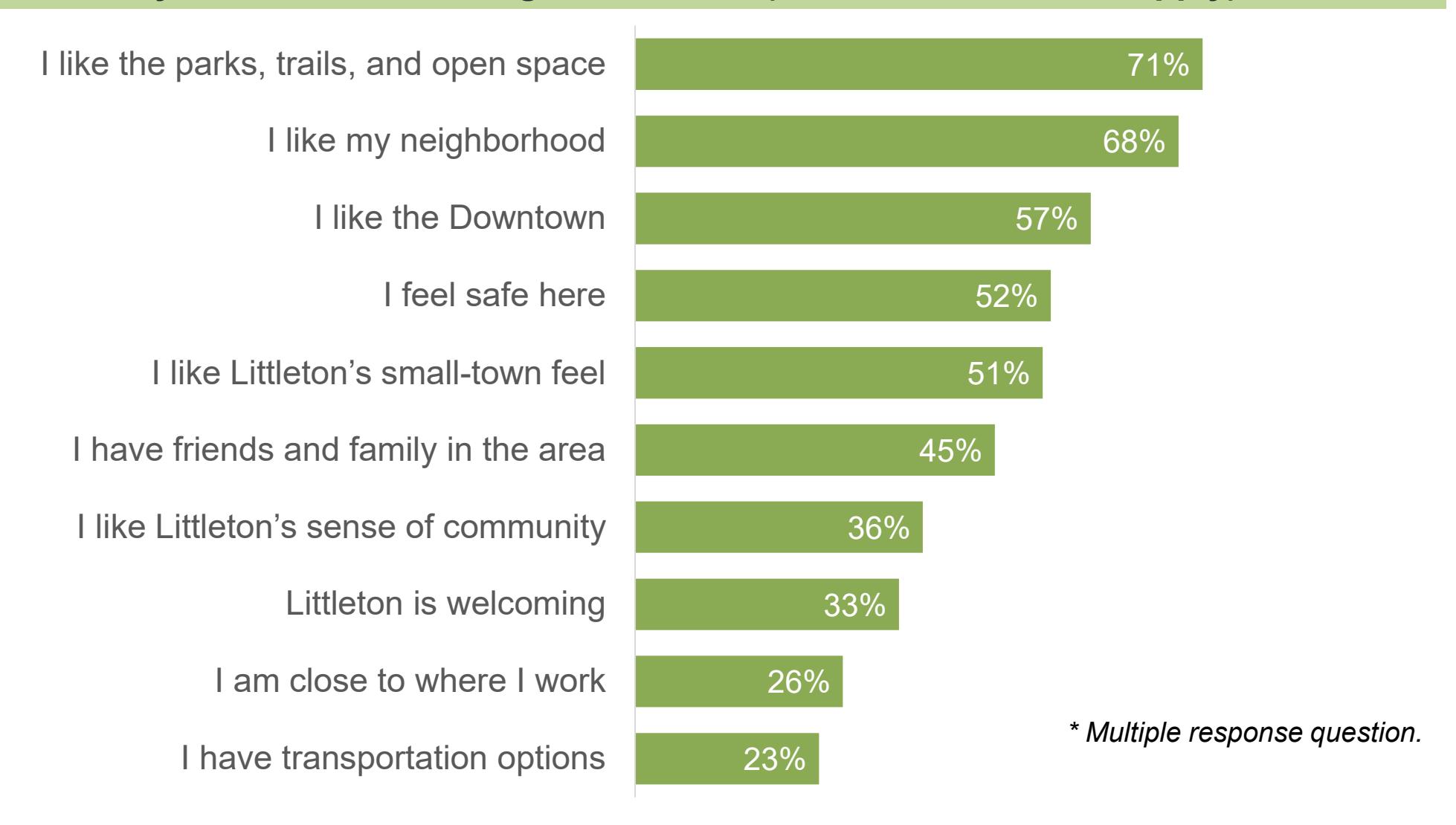
Littleton residents rated their quality of life and city services highly in the city’s 2026 resident survey, while identifying housing costs, traffic, street conditions, homelessness and growth as leading concerns.
About 90% of respondents rated Littleton’s overall quality of life as excellent or good, while 79% gave the same rating to overall city services. Eighty-six percent agreed that city employees provide first-rate service, according to the 2026 resident survey report.
The Littleton Museum, parks and trails, Bemis Library and Town Hall Arts Center received the highest service ratings. Street resurfacing or pavement management, job opportunities and traffic flow received the lowest.
When asked to identify up to three pressing issues for the next two years, respondents most often cited affordable housing and the cost of living, at 41%; traffic, at 35%; street resurfacing or pavement management, at 29%; homelessness, at 27%; and too much growth, also at 27%.
Residents rated environmental sustainability, snowplowing, traffic flow, street resurfacing and pavement management, and the sewer system as highly important but comparatively lower in quality.
The survey was sent to 6,391 residential addresses in June. The city reported 788 completed surveys, a 13% response rate and a margin of error of no more than 4 percentage points at a 95% confidence level. Results were weighted to reflect Littleton’s adult population by factors including age, gender, housing tenure, housing-unit type, ethnicity and council district.
The report cautions that subgroup margins of error are larger and that nonresponse can create additional error. It also includes a separate open-participation survey completed by 268 residents; because participants were not selected through a random sample, those results cannot be assigned a confidence level or combined with the address-based survey.
Sixty-four percent of respondents agreed or strongly agreed with using debt financing through a voter-approved general-obligation bond for specific capital projects without a tax increase. The survey did not ask respondents to identify projects for such a bond.
The City Council is scheduled to review the survey results Sept. 22 during a study session. Staff recommended using the findings to help update the city’s Horizon 2027 strategic plan and identify priorities and service gaps.