
Denver committee set to hear three labor-history acknowledgement drafts
The versions range from a focus on Black labor history to a broader account of exclusion; a city presentation says stakeholders favored keeping the scope focused.
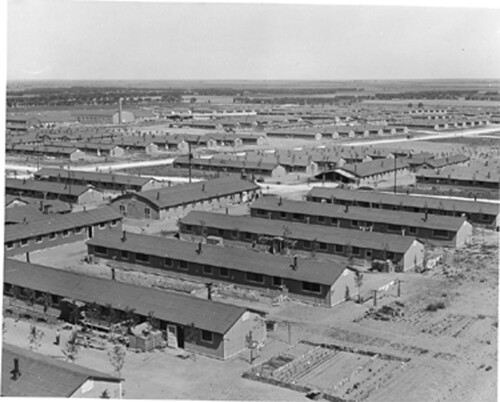
Denver’s Finance and Business Committee is scheduled to receive a Sept. 29 briefing on three versions of the city’s labor-history acknowledgement. The drafts differ on whether it should focus on Black labor history or address a wider range of histories of exclusion.
The committee agenda lists the item as a briefing presented by Council Member Lewis. The main draft describes the role of enslaved Africans and their descendants in building the country’s economy and infrastructure, recounts slavery and later racial violence, and closes with a commitment to “truth, accountability, and repair.”
Councilman Flynn’s alternative adds histories including Indigenous and Latino people subjected to debt servitude, Black, Jewish, Catholic and immigrant communities targeted by the Ku Klux Klan in 1920s Denver, Mexican families expelled from Colorado in the 1930s, and Japanese Americans incarcerated at Camp Amache during World War II. Council President Romero Campbell’s version places the acknowledgement in a broader account of how race, nationality, gender and religion have been used to restrict wealth-building. It also emphasizes equitable city services, programs and employment.
The presentation prepared for the committee says stakeholder groups met Sept. 15 and 16 and summarizes their “consensus position” as opposing an expanded or changed scope. The slides say participants wanted to fully name the specific history, described the acknowledgement’s objective as unique, supported solidarity with other groups and wanted to foreground state efforts.
The presentation also includes a heading, “Resolution: withdrawing the acknowledgement,” but does not provide resolution text. The agenda lists a briefing, not a vote; the materials do not establish an adopted revision or withdrawal.