
Denver proposal would expand traffic-camera enforcement to dozens of corridors
The draft would let cameras detect speeding, signal and certain sign violations, among others, on designated streets. A city committee is scheduled to consider it Oct. 7.
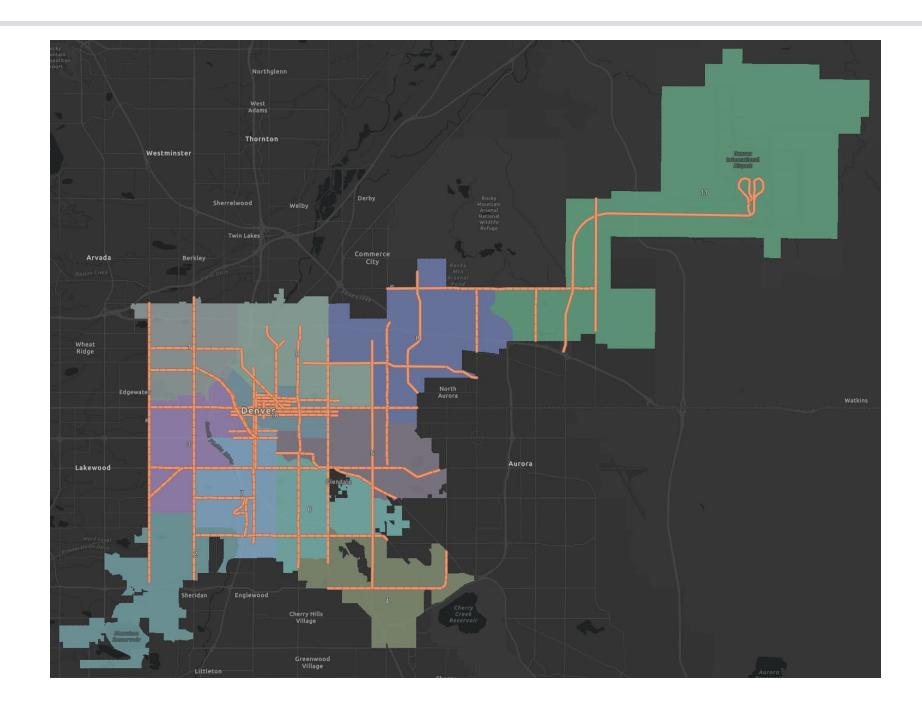
Denver has proposed expanding automated traffic enforcement to 36 city street segments and 10 state-highway segments. Use on state highways would require state approval, and the draft would allow speeding penalties of up to $120, the proposed ordinance says.
The draft would cover speeding, traffic-signal and certain sign violations, moving violations on designated safe routes to school, unauthorized use of bus or bicycle lanes, and passing a stopped school bus with its warning lights activated.
The city segments include portions of 13th, 14th, 16th through 19th and 38th avenues, as well as stretches of Colfax, Broadway, Federal, Speer, Colorado, Alameda and other roads. The 10 state-highway segments include portions of Colfax, Colorado, Federal, Hampden, Sheridan and Santa Fe, as well as Leetsdale Drive and Parker Road. The ordinance gives the corridor boundaries and full list.
Denver currently uses citywide red-light cameras and five mobile speed-enforcement vans assigned to police. The city plans to start the updated program with transportable cameras, including the vans, and may consider fixed cameras later. The draft would allow both mobile and stationary systems. Denver Public Safety’s September committee presentation says corridor selection draws on five years of crash, speeding or reckless-driving data and aims to distribute enforcement across the city rather than concentrate it in one neighborhood or council district. The presentation also lists continued equity analysis as planned work.
Under the draft, drivers would receive warnings for the first 30 days after a system is installed or deployed, following at least 30 days of advance public notice. Violation notices would go to registered vehicle owners by mail or personal service, generally within 30 days for Colorado-registered vehicles and 60 days for vehicles registered elsewhere. Owners would have at least 45 days to pay or request an administrative hearing. The owner would generally be responsible, with exceptions including a vehicle sold or stolen before the violation.
The draft calls for warnings for some lower-level speeding violations, $40 penalties for many violations from 10 to under 25 mph over the limit, and penalties up to $120 for driving 25 mph or more over. Some penalties would be higher in school and construction zones. It also bars vendor compensation tied to citation volume or revenue and says fines cannot be paid to camera vendors.
The Health and Safety Committee is scheduled to hear public testimony and consider the measure on Oct. 7. That is a committee-stage hearing, not adoption; the committee agenda lists briefing and discussion/action.