
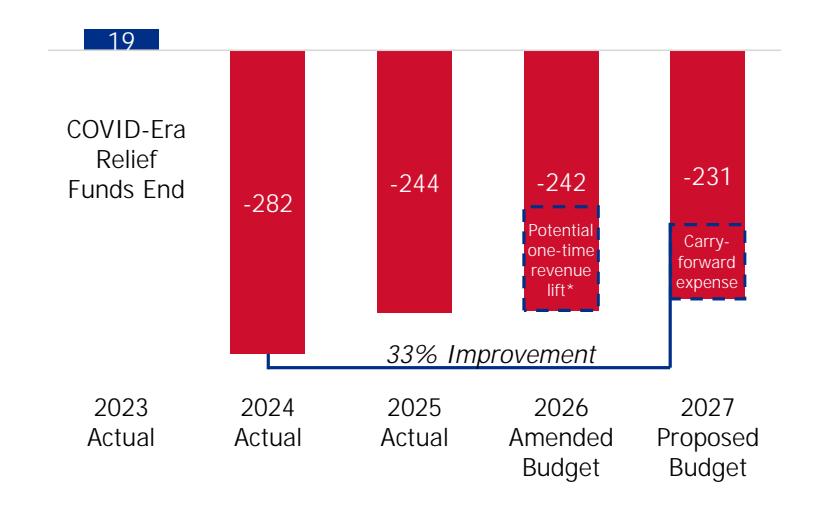
RTD’s 2027 budget proposal projects $231 million decline in net position
The proposal puts debt-service coverage below the agency’s minimum and cuts its capital replacement reserve, which a five-year forecast shows reaching zero by 2030.
Published at
RTD’s proposed 2027 budget projects a $231.3 million decline in net position and a debt-service coverage ratio of 1.0, below the agency’s 1.2 minimum, the proposed budget shows.
The ratio compares revenue remaining after operating and maintenance expenses with annual debt-service requirements. A ratio of 1.0 means projected net revenue equals debt service; RTD’s fiscal policy sets a minimum 20% margin above that level.
RTD staff said coverage could improve through capitalizing some labor costs, continued spending restraint and further deficit reduction. That reduction is tied to the board’s commitment to balance the budget while developing the 2028 proposal. The $231.3 million net-position decline includes operating carryforward appropriations. Excluding those expenses, the budget presentation shows a $190 million decline and anticipates lower actual spending and a smaller decline.
The proposal would reduce the capital replacement reserve to about $50.2 million, from $166 million in the 2026 amended budget. RTD’s five-year forecast shows the reserve falling to zero in 2030 and says the forecast does not meet the agency’s reserve policy. The proposal also includes $65.6 million for new capital work, including track replacements on the Central Platte Valley and Central corridors. Separately, it carries forward $555 million for previously approved capital work; that amount is not all new 2027 project funding.
The proposal budgets 3,452 positions, a 5% decrease that includes vacancies. The board is scheduled to consider adopting the budget Dec. 1, 2026; the current figures are proposed, not final.