
Denver plan update would limit housing in manufacturing areas
The proposal would preserve manufacturing areas, allow narrow affordable-housing exceptions and permit limited residential use in Innovation/Flex districts.
Published at
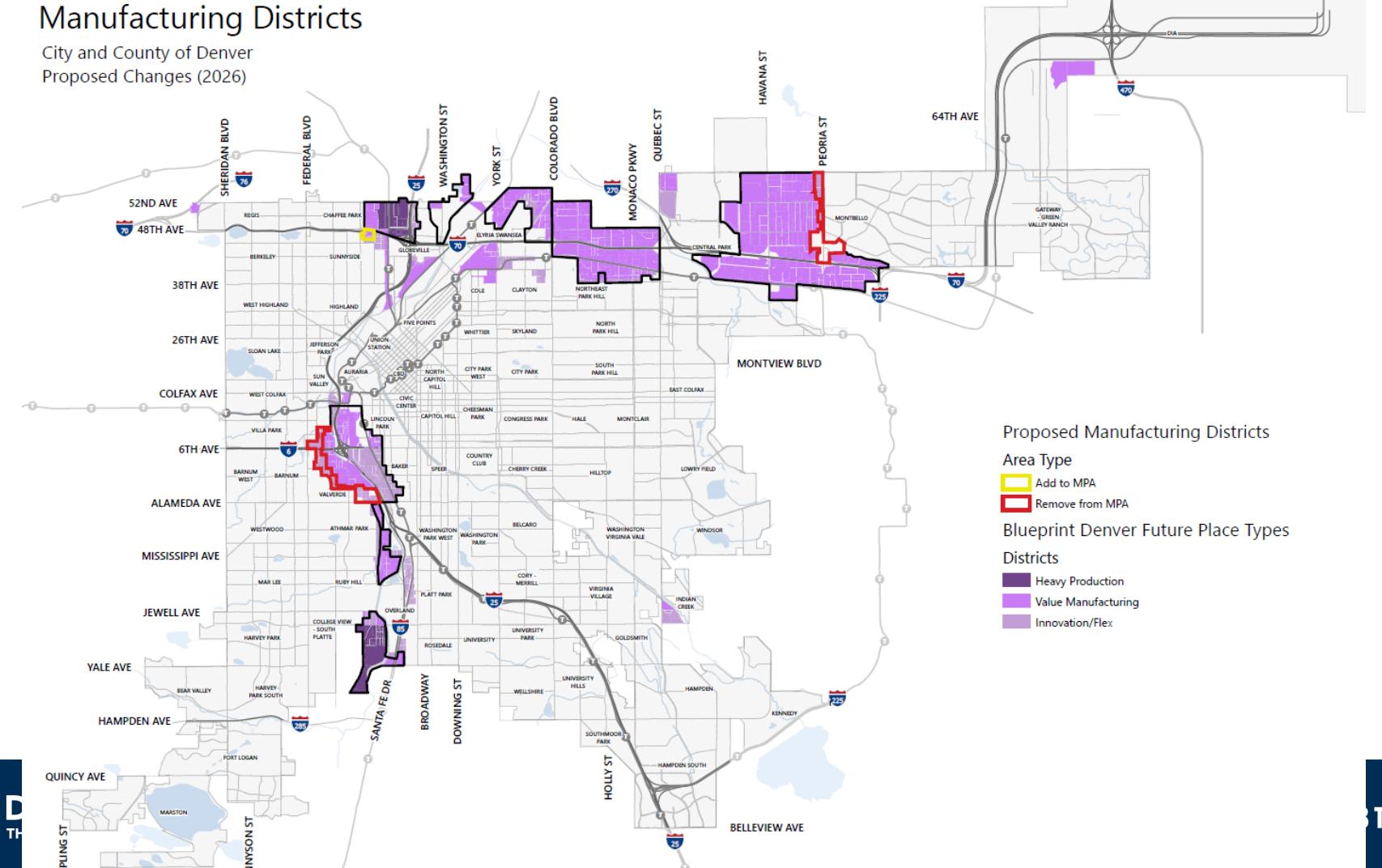
Denver’s Planning Board voted 8-0 on Oct. 21 to recommend an update to Blueprint Denver that would generally discourage housing in Value Manufacturing and Heavy Production areas. The update would guide land-use decisions, not change zoning, and still needs City Council action.
The draft says manufacturing uses should be preserved in Value Manufacturing and Heavy Production areas, where residential uses “should be prohibited” except in case-by-case situations to meet vital community needs for affordable housing. It describes a narrow possibility for affordable housing in vacant or underused hotels or motels at the edges of preservation areas, if a project meets an exceptional need and includes services and amenities. In Innovation/Flex areas, the proposal allows limited residential uses but says housing should not dominate. It also directs future neighborhood plans to align manufacturing-preservation boundaries with Value Manufacturing and Heavy Production designations, and to exclude Innovation/Flex areas from those preservation areas, the draft says.
The proposal also touches on Swire Coca-Cola. The draft names Coca-Cola among key employers outside contiguous manufacturing-preservation areas that are “desirable to retain on a case-by-case basis.” In an October email, a Swire representative said the company understood the proposal to extend preservation limits to all Value Manufacturing areas and believed its site might be included. The representative asked that the plan not foreclose community discussion of redevelopment options. The draft does not identify Swire’s parcel or establish its land-use classification, the company wrote to a city planner.
Public comments reflected competing concerns about housing and industrial preservation. One commenter argued that some underused, well-connected manufacturing areas could suit housing. The city said its intent was to clarify where industrial uses should be preserved and where housing should be allowed. Another commenter said the industrial revisions were too significant for a limited technical update and questioned the public outreach; the city said the language drew on existing practices and input from other plans, in its responses to comments. Planning staff also described the changes as clarifying existing policy and aligning place-type guidance with neighborhood plans, in its recommendation.
The update is part of a package that would add Denver’s existing One Water Plan to the city’s comprehensive plan without changing its recommendations. The staff presentation also describes a proposed Far Northeast change supporting industrial uses, says the package is intended to meet a state deadline of Dec. 31, 2026, and lists a City Council first reading on Nov. 30 and public hearing on Dec. 7 as proposed next steps, according to the presentation. As of Nov. 13, the City Council’s Community Planning and Housing Committee was scheduled to consider the proposals Nov. 17; the committee agenda lists both items.