
Arapahoe County discusses performance-based business tax rebates
The draft would tie rebates of county business personal-property taxes to investment and jobs; commissioners discussed possible $750,000 and $800,000 annual caps but approved neither.
Published at
Arapahoe County commissioners discussed a draft policy Nov. 23 that would tie rebates of the county’s share of business personal-property taxes to investment and job outcomes. The study session was for feedback and direction, not adoption. Staff said it would revise the proposal and return it to the board; commissioners approved neither the policy nor a proposed annual cap, the meeting record shows.
The commissioners considered possible annual caps of $750,000 and $800,000, but neither amount was adopted as a limit or spending authority. Staff had recommended moving the draft toward formal adoption.
The proposal would formalize the county’s existing rebate program as an economic-development tool. Qualifying businesses could receive rebates of up to 100% of the county’s share of their taxes. Rebates would be discretionary, subject to available funding and annual appropriations, and generally run for five years. Businesses would be paid only after paying their taxes and meeting reporting and performance requirements, under the draft policy.
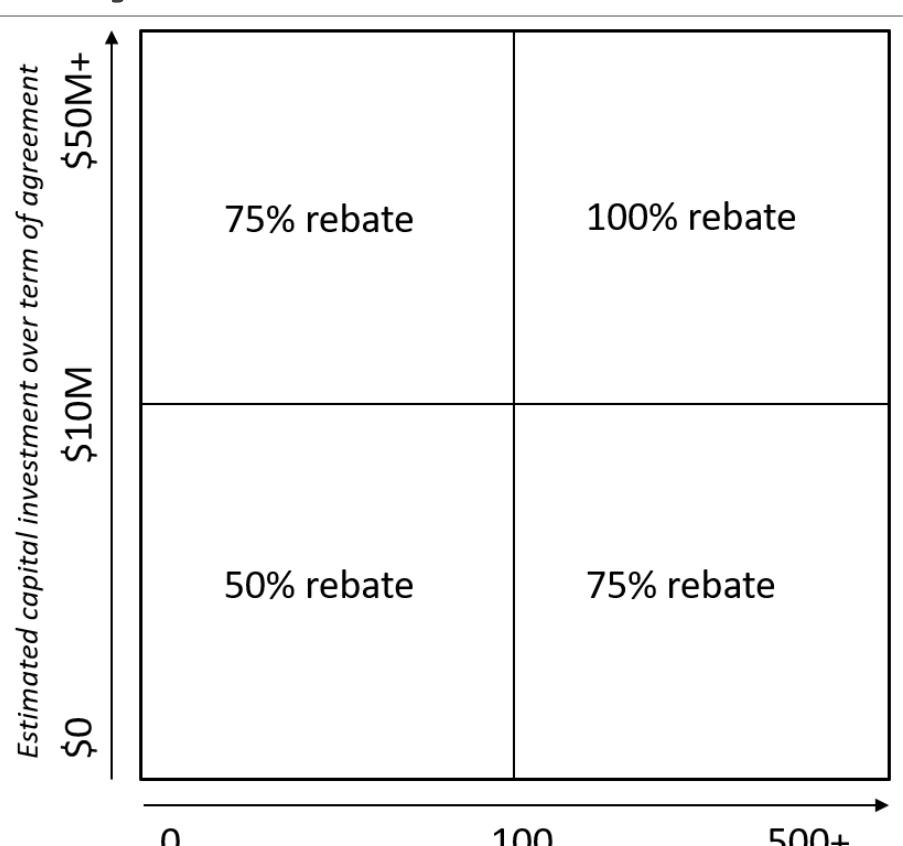
A draft evaluation matrix would weigh proposed rebates against projected capital investment and job creation over the agreement term. Other possible considerations include support for targeted industries, county strategic-plan priorities and distinctive community or economic benefits. Applicants would have to meet at least three criteria, including being a primary employer establishing or expanding a county facility, investing at least $1 million in qualifying property, paying average wages at or above the county median, creating net new jobs in a targeted industry or area, or demonstrating a distinctive benefit or alignment with targeted growth industries. Projects must still be considering location or expansion options so an incentive could affect the decision. The county’s presentation also lists 10 active agreements with six businesses and reports average refunds of $550,000 over eight years; the presentation’s evaluation and program details are outlined here.
The draft would exclude large-scale data centers from new tax incentives and allow the Board of County Commissioners to designate other excluded industries. The policy concerns tax rebates, not zoning rules.
The staff report estimates current obligations for active rebates at about $550,000 per year, a different measure from the presentation’s average-refund figure. Neither the staff report nor the presentation estimates the proposed policy’s total cost, and the report describes the session as a request for feedback and direction.