
Aurora district presentation says 8% of multilingual students met reading benchmark
The figure covers grades 3–12 students classified as Non-English Proficient or Limited English Proficient and measures a national norm, not Colorado state proficiency.
Published at
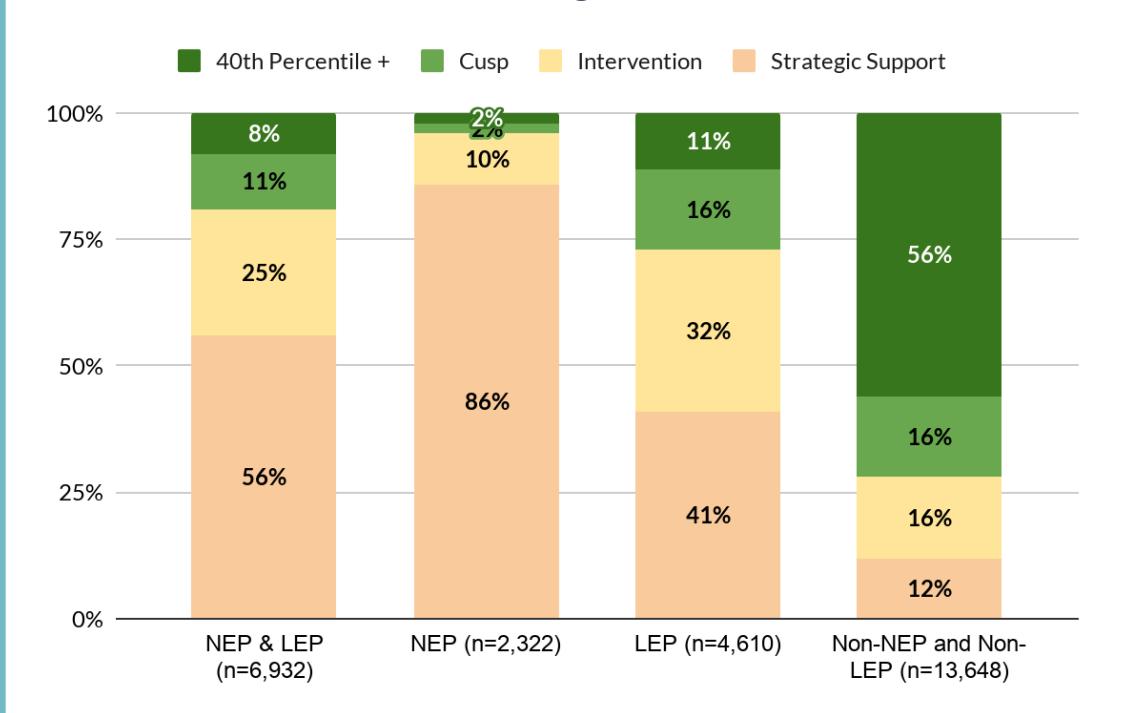
Aurora Public Schools’ presentation prepared for a Dec. 1 Board of Education work session reports that 8% of students in grades 3–12 classified as Non-English Proficient or Limited English Proficient scored at or above the 40th percentile on the district’s beginning-of-year STAR Reading benchmark. The results refer to the start of the 2026–27 school year, the district’s presentation says.
The 40th percentile is a national, same-grade comparison—not a Colorado state proficiency measure or a percent-correct score. Renaissance, the STAR assessment publisher, says its default “at/above benchmark” category begins at the 40th percentile. Another 11% of students were described as “on the cusp,” but the presentation does not define that category’s score range.
The presentation separately estimates that 3,913 students in grades 3–12 were on track toward the district’s 2026–27 goal, with 126 more needing to move onto that trajectory. The district based those figures on anticipated time to proficiency because the Colorado Department of Education had not provided current on-track data. They are estimates, not STAR benchmark results or current state-reported counts.
The district’s strategy combines explicit language instruction across subject areas with dedicated English-language development. The presentation also describes language-instruction and data-use training for staff, collaborative teacher planning and practice, and analysis of academic, attendance, behavior, belonging and engagement data to guide support before the end of the school year.
The presentation is for board monitoring and information; it does not propose formal board action.