
Denver council members used June 1 gun-violence debate to warn of pressure on prevention spending
During a June 1 proclamation debate, Denver City Council members argued recent shootings show the city is not investing enough in violence prevention. Budget records reviewed for this story show some related offices shrank between 2025 and 2026 while some youth-violence-prevention functions were moved rather than eliminated, and council’s 2027 budget letter calls for continued community-based safety funding.
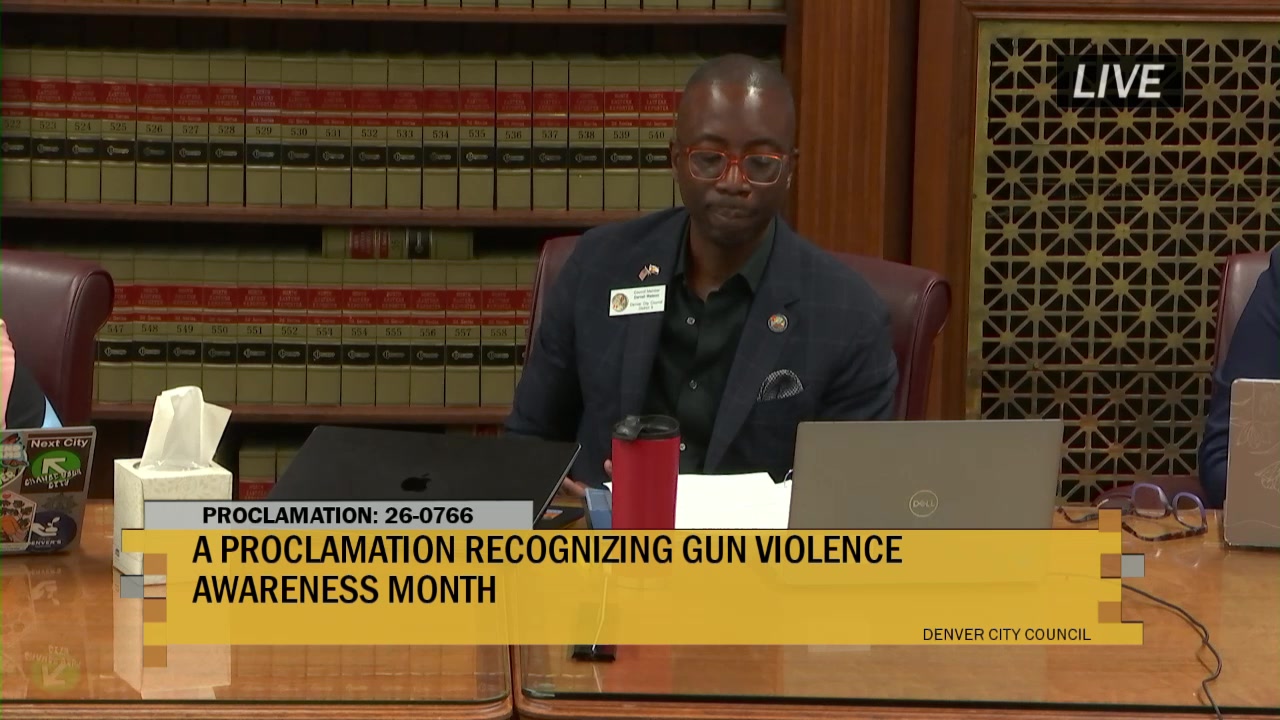
Denver City Council members used a June 1 debate over a Gun Violence Awareness Month proclamation to signal an argument likely to resurface in the city’s next budget cycle: whether Denver is doing enough to fund violence prevention.
During the council debate, several members linked recent youth killings and other shootings to broader questions about spending on prevention, recreation, housing, food access and transportation. Councilmember Shontel Lewis said the city had only five violence interrupters. Councilmember Stacie Gilmore said gang-prevention funding had been repeatedly reduced and said a gang-prevention line item had been zeroed out in the prior budget year.
The budget record reviewed for this story supports the broader concern that some prevention-related spending has declined, but it does not fully substantiate all of the claims made on the council floor.
Denver’s 2025 adopted budget budgets about $5.9 million for the Office of Neighborhood Safety. The city’s 2026 final budget puts that office at about $5.5 million, a roughly 6.4% year-over-year decrease.
Those same budget books show the Office of Social Equity and Innovation falling from about $2.46 million in 2025 to about $1.81 million in 2026, a roughly 26.2% drop.
At the same time, the city did not simply eliminate all youth-violence-prevention functions. The 2026 final budget says the Office of Children’s Affairs youth-violence-prevention program was moved into the Office of Neighborhood Safety to align with citywide violence-prevention strategies. The 2026 proposed budget materials say an Administrator II position was moved to the Office of Social Equity and Innovation to support that program.
City webpages also show the Office of Neighborhood Safety continuing to list multiple intervention and youth-focused programs, including the Office of Community Violence Solutions, the Denver Juvenile Services Center, the Colorado Youth Detention Continuum, the RONI runaway-intervention project and the HYPE vocational program.
The public record more clearly supports council’s broader warning that prevention spending is under pressure as Denver moves beyond its federal relief funding period. During the June 1 debate, Councilmember Sarah Parady said earlier ARPA spending had helped drive recent declines in gun violence and that those dollars were now gone. A separate 2026 City Council budget-priorities letter similarly warned that one-time federal funds were winding down and urged the administration to maintain public-health and community-safety investments.
Council has already carried that argument into the next cycle. In a May 26 news release, council said it had sent Mayor Mike Johnston its 2027 budget goals. The accompanying letter to Johnston calls for “continued investment in community-based violence prevention and neighborhood safety strategies,” including the Community-Led Safety Grant program, and says the city should address the root causes of crime.
The Johnston administration has also kept gun violence on its formal agenda, though not yet through a detailed 2027 budget proposal. The mayor’s 2026 citywide goals include targets to reduce gun-related homicides by 10% and shootings in high-risk areas by 20%. The mayor’s 2025 annual report says shootings fell 37% in 2025 and firearm homicides fell 51%, crediting strategies including Place Network Investigations, Hot Streets and Trust Patrols.
What remains unresolved is the specific claim that a distinct gang-prevention budget line item was eliminated. The budget documents reviewed for this story show agency totals and program shifts, but they do not clearly identify a current standalone line item labeled "gang prevention." The available record also does not independently verify Lewis’s statement that the city currently has five violence interrupters.
That leaves the 2027 budget process as the clearer test of the warning council members delivered June 1: whether Denver will maintain or expand community-based anti-violence funding as federal relief dollars fade, or continue shifting resources among agencies while overall prevention-related budgets tighten.