
Denver committee reviews construction bidding overhaul, venue seat-tax concept
A City Council committee took up a draft shift to “best value” construction bidding and a separate proposal for a ticket tax on large venues to fund transportation and school-safety projects.
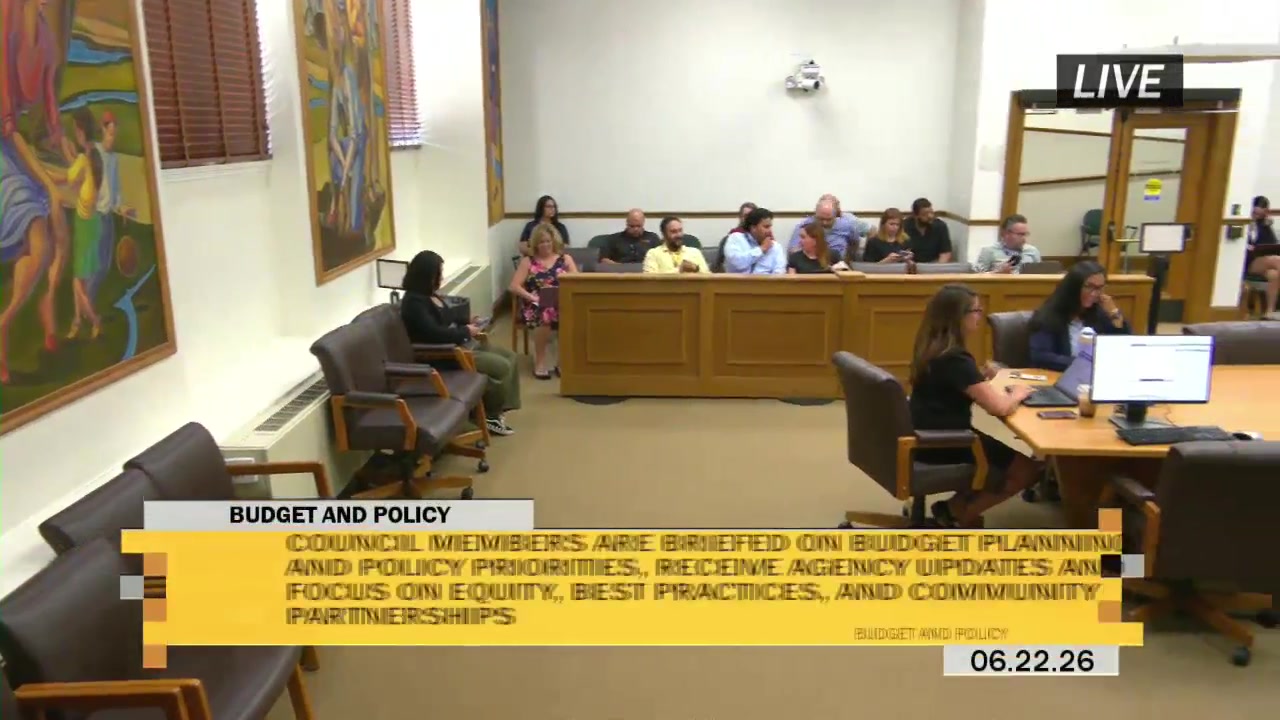
Denver City Council’s Budget and Policy Committee on June 22 reviewed two early-stage proposals with broad potential fiscal effects: a draft ordinance to change how the city awards construction contracts, and a venue seat-tax concept to fund transportation and school-safety work, according to the committee meeting record.
The contracting proposal from Councilmembers Chris Hines and Flor Alvidrez would move Denver away from awarding city construction work based only on the lowest bid and toward a “best value” model that scores multiple factors, according to the committee discussion. Sponsors said the draft is aimed at construction projects, not all city procurement, as Denver prepares for more than $2.5 billion in capital work, including about $920 million tied to National Western, $950 million from Vibrant Denver bonds and about $530 million in downtown authority projects, according to the presentation described in the meeting record.
Under the draft discussed in committee, bids would be evaluated on legal compliance, financial capacity, past performance, workforce practices, safety, compensation and benefits, project approach and cost, according to the meeting record. Cost would remain part of the evaluation, but not the sole deciding factor, sponsors said in the committee discussion.
Committee discussion centered on who might benefit or be squeezed by the change. Council members and staff said the proposal could affect large construction firms, subcontractors, union labor, small businesses and minority- and women-owned firms seeking city work, according to the committee discussion. Alvidrez said smaller firms may have a harder time meeting apprenticeship or other qualification standards, and committee members discussed whether Denver may need a tiered system so smaller contractors are not shut out of lower-dollar work, according to the same meeting record.
Denver’s Division of Small Business Opportunity also warned that added prequalification requirements could become a barrier for smaller firms, according to the committee discussion. Staff said existing on-call contracts would not be reopened retroactively, so any shift would largely affect future contracts and could take years to fully move through the pipeline, according to the meeting record.
Committee members also pressed city attorneys and the administration on legal and procedural hurdles. Administration officials said Executive Order 8 already contemplates some best-value concepts but may need revision because it is structured around prequalification, according to the committee discussion. City attorneys said the larger issue is charter language referencing the “lowest qualified responsive bidder,” according to the same meeting record.
A separate presentation from Councilmember Amanda Sawyer and Councilmember Sarah Parady’s office outlined a voter-approved seat tax on large venues, with proceeds earmarked for Denver Moves, Safe Routes to School and other multimodal transportation projects, according to the committee discussion.
As described in committee, the concept would apply to venues with more than 1,000 seats and tax original ticket sales at 5% for tickets under $100, 10% for tickets from $100 to $250 and 15% for tickets above $250, according to the meeting record. Exemptions discussed in committee included city-owned venues, smaller venues, youth athletics, K-12 and higher-education events, and nonprofit or amateur events, according to the same record. Staff and sponsors said the tax would be collected on the original sale, not applied to resale tickets, according to the committee discussion.
Sponsors estimated the tax could raise about $30 million a year, and advocates told council Denver already collects a 10% seat tax at city-owned venues that brings in about $22 million annually, according to the meeting record. They argued private venues generate traffic, pollution and road wear without paying a comparable charge, according to the committee discussion.
But council members said the concept was not ready for voters. During the June 22 discussion, members said there was no draft ballot measure and questioned the revenue assumptions, the 1,000-seat threshold, the effect on family ticket costs, whether the measure should sunset and whether Denver had fully modeled effects on venues, transit service and the resale market, according to the meeting record.
Council members also raised legal questions about whether the city could apply the tax to stadium-district venues, though a deputy legislative counsel said in committee that Denver did not see the district structure as a barrier to assessing the tax, according to the committee discussion.
Neither item was presented as final legislation ready for passage. Instead, the meeting showed council members testing how Denver might reshape city construction contracting and potentially ask voters to help fund transportation safety projects tied to major venues.