
Castle Rock budget forecasts sales-tax growth as homebuilding slows
The proposed $411.8 million plan assumes 4.5% annual sales-tax growth, much of it tied to Costco’s anticipated opening, and includes public-safety staffing and higher water rates and fees.
Published at
Castle Rock’s proposed 2027 budget forecasts $99.3 million in sales-tax revenue, assuming annual growth of 4.5%. The budget ties much of the forecast to Costco’s anticipated opening, the proposal says.
Homebuilding was below the pace assumed in the town’s 2026 budget. Through June 30, 2026, Castle Rock had issued 106 single-family permits and no permits for multifamily units, compared with annual assumptions of 300 single-family permits and permits for 110 multifamily units. The town’s second-quarter financial review says slower-than-anticipated growth is affecting revenue; impact and system-development fee revenue was below its year-to-date budget, which the town attributed to fewer-than-estimated licenses and permits.
Sales-tax collections, meanwhile, were higher than a year earlier. The town collected $45.8 million from January through June 2026, compared with $42.7 million in the same period of 2025, a 7.2% increase, the town’s sales-tax report shows. That first-half comparison is separate from the proposed budget’s 4.5% annual growth assumption for 2027.
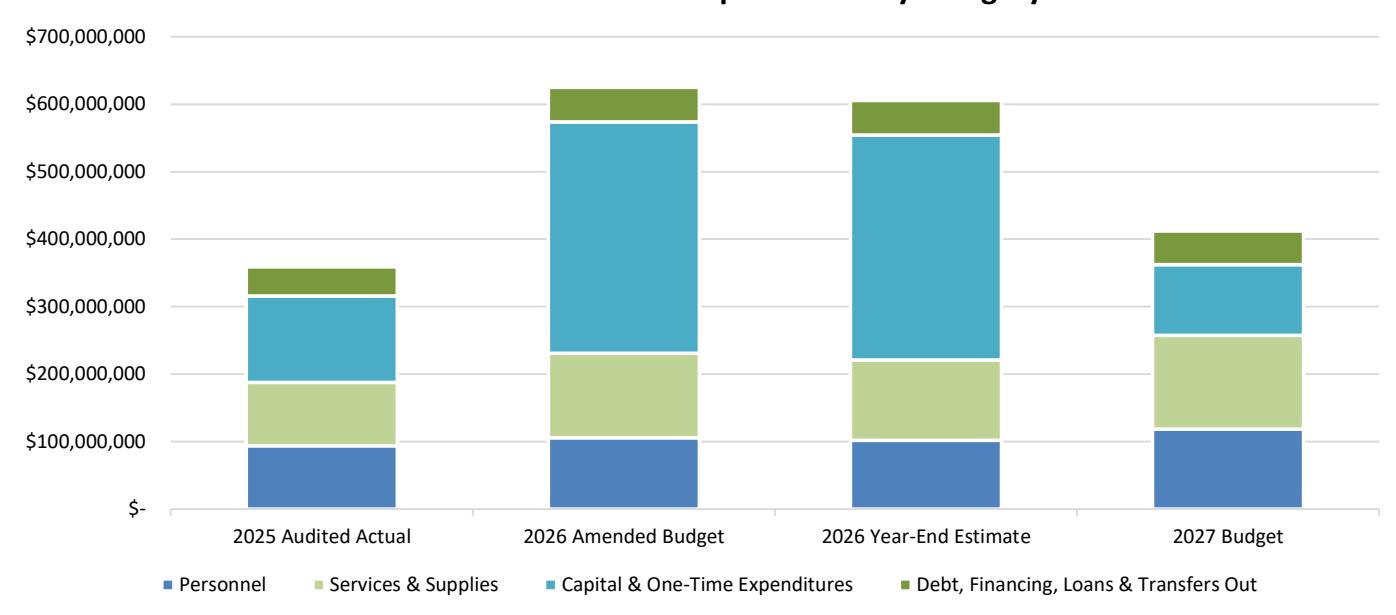
The proposed townwide budget totals $411.8 million, including $348.5 million in expected revenue and $63.3 million from capital reserves. It includes five Fire and Rescue positions and five Police positions. Three proposed fire positions and a traffic officer would add to voter-approved staffing levels. Two firefighter/paramedic positions were already planned, while two Strategic Response Center officers would move up from 2028. The proposal also includes water-rate and fee increases of 4% to 5%, higher growth-related water system development fees, and increases to some recreation and golf fees.
Through June 30, General Fund expenditures were $48.85 million, about 18% below the $59.61 million year-to-date budget. The report attributes the variance largely to the timing of public-safety expenses and projects such as trail improvements. Townwide, $75.3 million had been spent from the amended 2026 capital budget of $343.1 million. The schedules also show a separate, seasonally adjusted year-to-date capital budget of $144.4 million; the report cites project timing and seasonal factors among the reasons for capital-spending variances. The town’s financial schedules distinguish those midyear comparisons from the full-year amended capital budget.
The 2027–2031 capital improvement plan totals about $291.3 million, including nearly $147 million for water, stormwater and wastewater projects.